
Best Managed Disaster Recovery Providers for SMBs 2026
Ever wonder what would happen to your business if a storm knocked out your office tomorrow? We’ll help you find the best managed disaster recovery provider for SMBs, no tech PhD required. Our research shows compliance is often overlooked: only 22% of providers mention it, and they all cite HIPAA. So pick carefully. Here are our top 10 picks for 2026.
1. Advatek (Our Top Pick) , Complete DR with Cybersecurity and Compliance Focus

Advatek is a managed disaster recovery provider for SMBs that bundles DR with 24/7 security monitoring, AI-driven threat detection, and compliance management. It’s best for healthcare practices, finance firms, and law offices that need HIPAA or other regulatory support. Advatek’s team takes over your IT pain points so you can focus on growth. Unlike many providers, Advatek explicitly addresses compliance in its DR offerings, critical for SMBs in regulated industries. The caveat: pricing isn’t public, so you’ll need to request a quote. But for SMBs that can’t afford a dedicated IT team, it’s a solid choice.
Pro Tip: Ask Advatek about their disaster recovery as a service plans if you want a fully managed, cloud-based solution.
2. Datto , Best for All-in-One Backup and Disaster Recovery
Datto provides an integrated platform for backup, DR, and business continuity, with both cloud and on-premise appliances. It’s best for SMBs that want a single solution from one vendor. Datto’s strength is its reliability: continuous backup and instant recovery options. However, many users note that pricing can be higher than standalone backup tools. For a managed disaster recovery provider for SMBs, Datto is a strong contender, especially if you value simplicity.
3. Zerto , Best for Cloud DR with Near-Zero RPO
Zerto specializes in continuous data replication for near-zero recovery point objectives (RPO). It’s best for SMBs that run critical applications and can’t afford data loss. Zerto’s platform works across hybrid and multi-cloud environments. The trade-off: it’s more complex to set up than simpler backup tools, and pricing is premium. If your business needs near-instant recovery, Zerto is worth the investment.
4. Acronis , Best for Cyber Protection and DR Integration
Acronis combines backup, DR, and ransomware protection in one package. It’s best for SMBs that want an all-in-one solution that covers cybersecurity and recovery. As Acronis explains, modern DRaaS includes isolated recovery environments and ransomware detection. The downside: some users find the interface cluttered. For SMBs already using Acronis for backup, adding DR is smooth.
5. Veeam , Best for Virtualized Environments and Fast Recovery
Veeam is the leader in backup and recovery for VMware and Hyper-V environments. It’s best for SMBs that run virtualized workloads and need fast, reliable recovery. Veeam’s cloud DR supports automated testing and orchestrated failover. The catch: Veeam’s licensing can get expensive as you add more workloads. But for virtualized shops, it’s the gold standard.
6. Unitrends , Best for All-in-One DR Appliances and 24/7 Support
Unitrends offers physical and virtual appliances that combine backup, DR, and deduplication. It’s best for SMBs that want a turnkey appliance with 24/7 support. Unitrends includes free disaster recovery testing. The limitation: cloud storage options are less flexible than some competitors. For SMBs that prefer appliances, Unitrends is a good bet.
Key Takeaway: Appliances like Unitrends simplify DR for SMBs with limited IT staff, but cloud-native options may scale better.
7. SaaS-Based DR with Cloud-Native Architecture
A cloud-native DR platform that runs on a major public cloud platform. It’s best for SMBs that want to avoid managing infrastructure. Its architecture supports fast failover and automated DR testing. Deploying proxies in multiple availability zones ensures high availability. The downside: you’re tied to that platform, and egress costs can add up. For SMBs already on that platform, it integrates tightly.
8. Enterprise-Grade DR for SMBs
Enterprise-grade data protection solutions offer AI-driven automation and compliance locks. They are best for SMBs that need advanced features like WORM storage for regulatory compliance. These DR solutions include clean room recovery and automated verification. The catch: pricing can be on the higher side, and the platform may be complex. But if you need enterprise-level DR without the enterprise IT team, this type of solution is a strong option.
9. Managed DR for Hybrid and Multi-Cloud , Best for Hybrid Cloud Environments
This managed DR solution provides a managed solution for hybrid and multi-cloud environments. It’s best for SMBs that run workloads on hybrid or multi-cloud infrastructures or have complex hybrid architectures. The DR services include automated failover and compliance support for regulations like GDPR and HIPAA. However, the learning curve can be steep, and costs may be higher than pure-play DRaaS. For SMBs committed to hybrid cloud environments, it’s a natural choice.
10. Recovery Point , Best for Ransomware-Specific DR and Compliance
Recovery Point offers DR solutions with a focus on ransomware protection and compliance, including HIPAA and PCI. It’s best for SMBs in regulated industries that need recovery from cyberattacks. Recovery Point provides immutable backups and isolated recovery environments. The limitation: fewer data center locations compared to larger providers. But for ransomware-specific DR, it’s a specialist worth considering.
Quick Comparison of Top Managed Disaster Recovery Providers
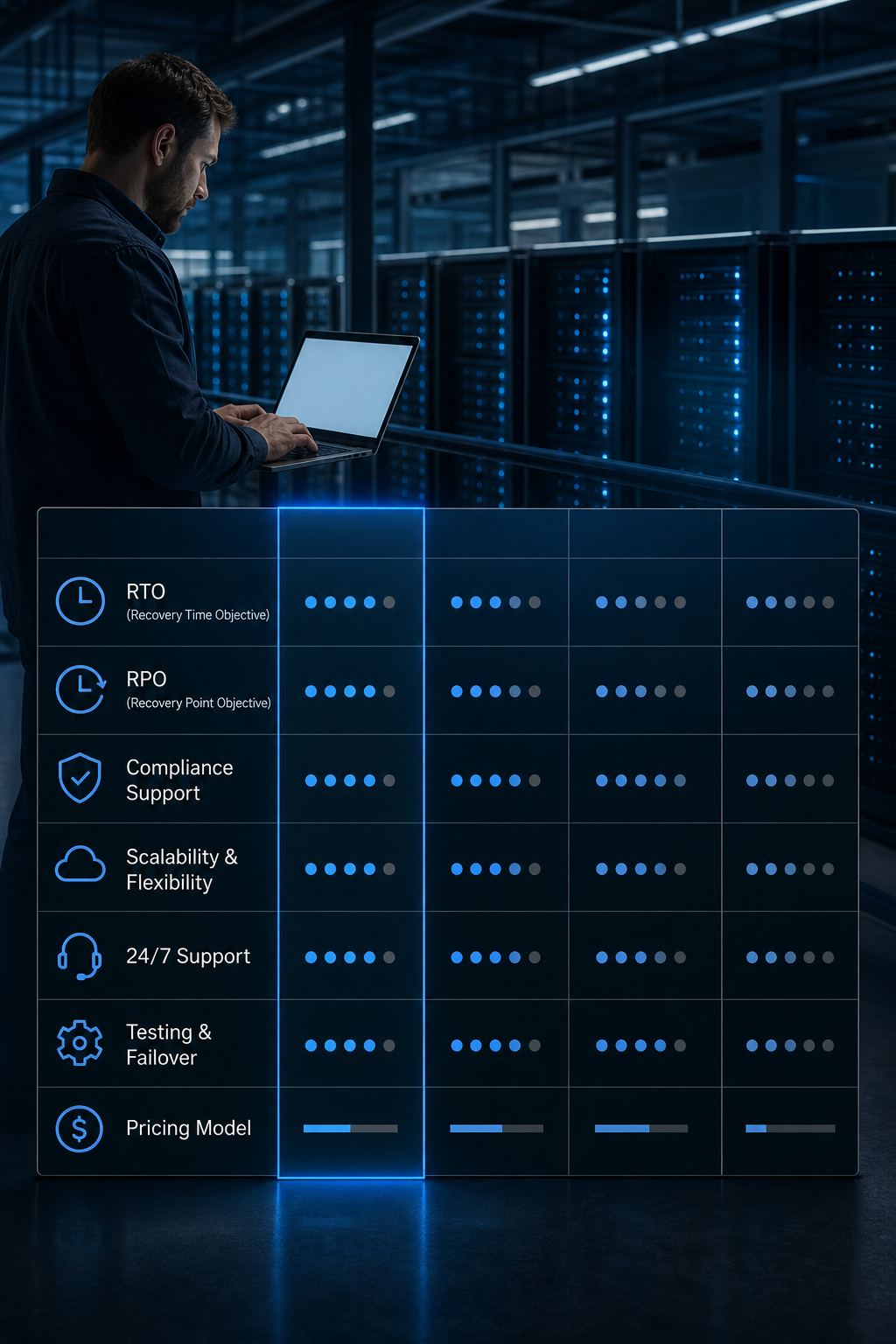
The table below compares key features of the top managed disaster recovery providers for SMBs. Note that most providers do not publicly disclose RTO/RPO or precise pricing, so we’ve marked those with “, “.
For more detailed comparison, on cloud backup services for small businesses.
Frequently Asked Questions
What is a managed disaster recovery provider for SMBs?
A managed disaster recovery provider for SMBs handles backup, replication, and recovery planning as a service, so the business doesn’t need in-house DR expertise. They often include testing, failover, and compliance support.
How much does a managed disaster recovery provider cost for SMBs?
Pricing varies widely. Some providers charge per GB of data, others per workload or via subscription. Only about 11% of providers publicly disclose pricing (e.g., pay-as-you-go models). Most require a custom quote based on your environment.
What should I look for in a DR provider if I need HIPAA compliance?
Ensure the provider signs a Business Associate Agreement (BAA), encrypts data in transit and at rest, and offers documented DR testing. Only a few providers explicitly advertise HIPAA support, Advatek, for example, makes it a core part of their offering.
Can a managed DR provider help with ransomware recovery?
Yes. Many providers now include ransomware protections like immutable backups, isolated recovery environments, and automated malware scanning. Acronis and Recovery Point are notable for their ransomware-specific features.
How often should I test my disaster recovery plan?
At least annually, but quarterly is better. Most managed providers include regular testing as part of the service. Testing uncovers gaps and ensures RTO/RPO targets are still achievable.
Conclusion
Choosing the right managed disaster recovery provider for your SMB doesn’t have to be overwhelming. Start with Advatek if compliance and cybersecurity are top priorities, it combines DR with 24/7 monitoring and regulatory support. Check out our list of managed IT providers for more options. Your next step: request a demo and test the recovery process. The best time to prepare is before disaster strikes.
Download Franchise Information Report
Want to learn more about opening your own franchise? Fill out this form to get started: