
Best HIPAA Compliance Software: 8 Top Picks
HIPAA work gets messy fast. You need to protect patient data while keeping up with risk reviews, staff training, vendor agreements, and security alerts. Advatek is a managed option for teams that want managed help instead of another dashboard to run.
1. Advatek
Advatek combines HIPAA support with managed IT and cybersecurity services. We built it for healthcare owners, compliance officers, home health operators, nursing homes, and other regulated businesses that need someone to watch the environment every day.
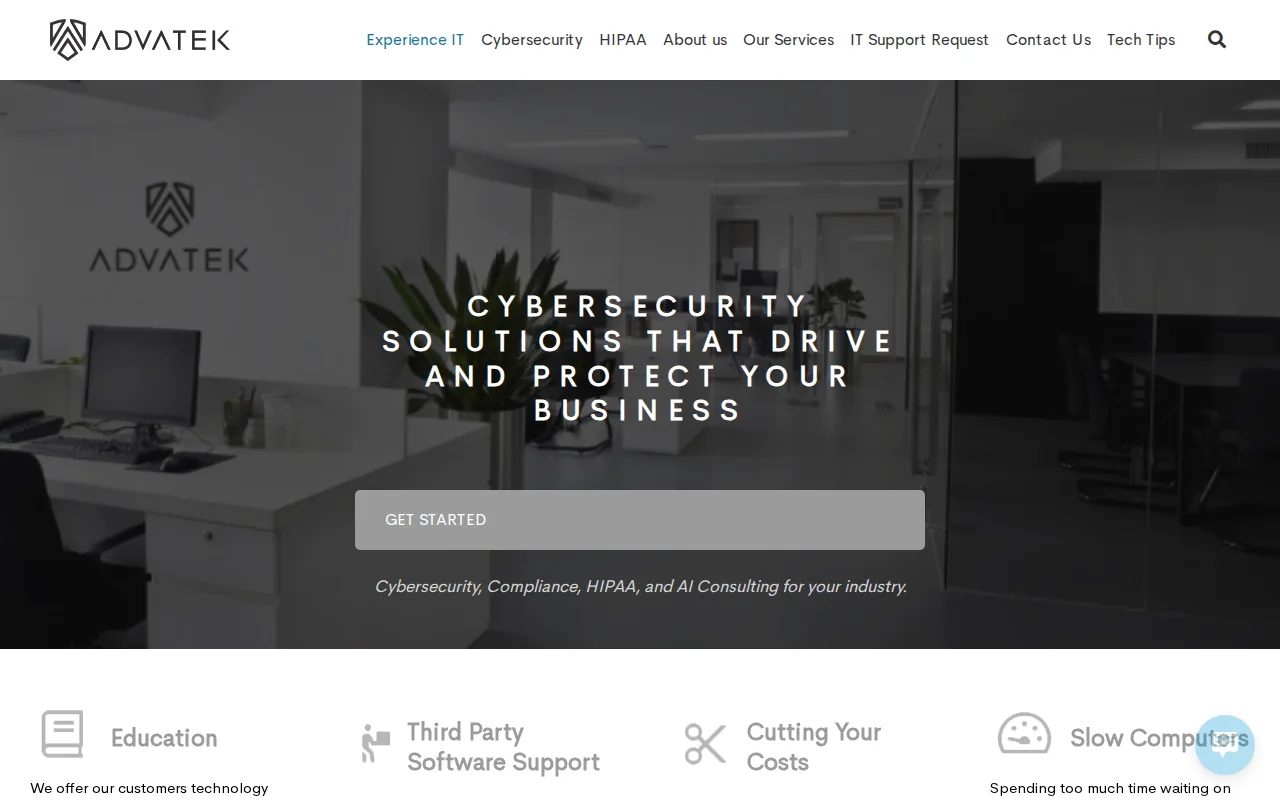
Our service includes 24/7 security monitoring, AI-driven threat detection, compliance training, and secure email hosting. That mix matters when a practice has a small IT team. We can watch for suspicious activity while your staff handles patient care. We can also help keep policies and training tasks from falling through the cracks.
Many software products in this market focus on self-service workflows. Advatek takes a managed-service route instead. We work with the systems, people, and vendors that make up your day-to-day setup. That is a better fit when a compliance manager doesn’t have time to review alerts or chase every open task.
The caveat is simple: Advatek is a service partnership, not a quick sign-up product for teams that want to do everything alone. Scope, systems, and support needs should be reviewed before work begins.
For practices that want a hands-off path, we can connect healthcare cybersecurity services with the compliance work instead of treating security as a separate task.
2. Vanta, broad compliance automation for growing companies
Vanta is a broad compliance platform for mid-market and enterprise SaaS teams that need HIPAA beside SOC 2, ISO 27001, or HITRUST.

Its strongest use case is a company with an existing cloud stack and several frameworks on its roadmap. Vanta says its platform supports continuous monitoring, risk management, vendor risk work, and audit preparation. The platform offers more than 400 integrations, which can reduce manual evidence collection when your systems are supported.
That breadth can help a health-tech company map cloud controls to more than one framework. A security lead can keep risk work in one place instead of moving between separate spreadsheets and evidence folders.
The tradeoff is fit and contract flexibility. Vanta is built around broad compliance programs, so a small medical practice may find it heavier than needed. Research also flags rigid multi-year contract terms. Ask about renewal rules, framework add-ons, and what happens when your team or cloud stack changes.
Pick Vanta when multi-framework growth is the main concern. Don’t pick it solely because a long integration list looks good in a sales demo.
3. Drata, continuous monitoring for cloud-native compliance programs
Drata fits cloud-native SaaS companies that need HIPAA as part of a wider SOC 2 or ISO 27001 program.

Its model centers on continuous checks across infrastructure. Drata can scan infrastructure, collect evidence against mapped HIPAA controls, flag drift, and surface remediation tasks. That can help a lean engineering team spot a control failure before an audit request exposes it.
Drata makes the most sense when your team already thinks in cloud controls. A health-tech startup might use the same evidence stream for security reviews and HIPAA work. That keeps the compliance record closer to the systems that produce the evidence.
There is still work for people. A scan can’t decide whether a policy matches your actual patient-data workflow. It also can’t train a new employee or approve an incident plan. Your team must review findings and assign owners.
Pricing adds friction because the buying process is sales-led. Before a demo, list each framework you need and ask how the price changes when you add one. Drata is a strong choice for technical teams, but it may feel like too much for a small office that needs guided healthcare support.
4. Compliancy Group, guided support for healthcare organizations
Compliancy Group is aimed at covered entities and business associates that want guided HIPAA work with expert support.

The fit is clear for medical practices, dental offices, mental health providers, and other healthcare organizations that don’t want to build a program from blank templates. Its guided HIPAA and OSHA compliance support can help when the same organization must track patient privacy work alongside workplace safety duties.
A guided workflow is useful during a gap review. Someone can help the team identify where PHI is stored, who can access it, and which policies need an update. It can also give a practice a place to track training and vendor paperwork instead of leaving each item in a separate folder.
Don’t confuse guided support with a complete security operation. Your team still needs technical safeguards such as encryption, access controls, secure backups, and audit logs. You also need an incident plan that names who acts first if an account is compromised.
Compliancy Group is worth a look when healthcare-specific help matters more than broad SaaS framework coverage. Check the scope of support and the handoff process before signing, especially if your organization has complex systems or many locations.
5. Abyde, straightforward compliance for small practices
Abyde is designed for small and mid-size healthcare practices that want a clear HIPAA and OSHA workflow.
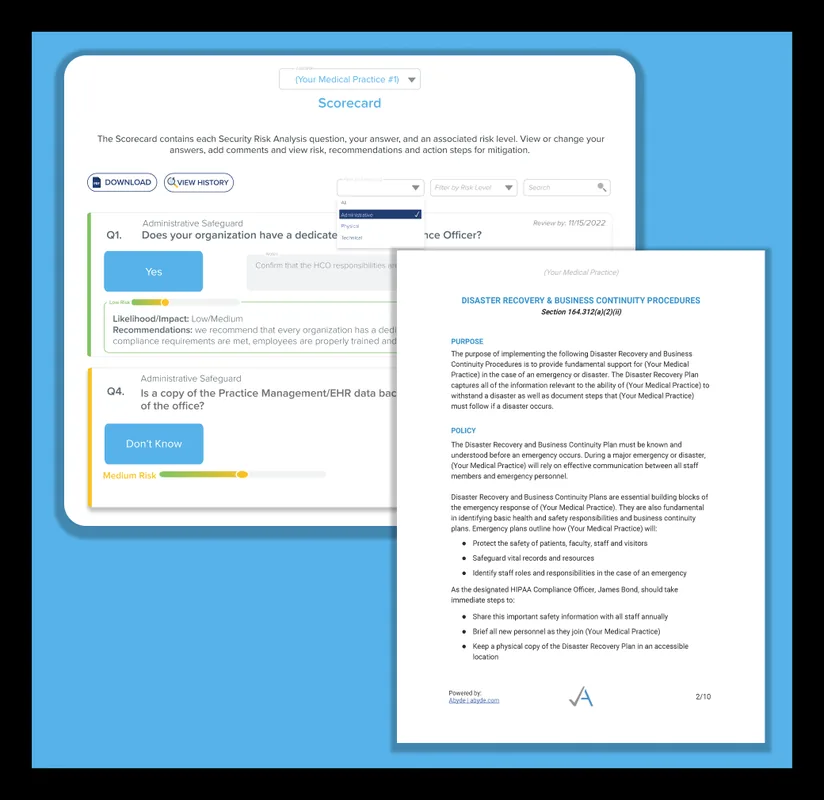
A short assessment can give a practice a quick starting point before a dee. The software also keeps training content and policy access in one place.
That setup works well for a dental, optometry, chiropractic, or mental health office with one person handling compliance part time. A manager can assign training, review open gaps, and track vendor agreements without building the workflow from scratch. Electronic agreement handling can also help when BAAs need renewal dates and status checks.
Audit results depend on how well an organization follows its policies and fixes gaps.
Pricing requires a demo conversation, . That may slow down a small buyer who wants to compare costs online. Still, Abyde is a sensible option when ease of use and healthcare focus matter more than cloud infrastructure monitoring.
6. Secureframe, structured HIPAA and SOC 2 workflows
Secureframe fits SMB SaaS teams that are running SOC 2 and HIPAA for the first time.

Its value is structure. A new compliance team can use mapped controls, evidence tasks, and workflow prompts to turn a loose project into a trackable program.
That can save time during the first policy cycle. Instead of staring at a blank page, a team can start with a draft and then change it to match its real access rules, incident process, and backup plan. The review step still matters. A policy that sounds right but doesn’t match your systems creates audit risk.
Secureframe is stronger for a SaaS company than for a traditional care facility that needs deep healthcare workflow support. Its HIPAA experience feels like a layer built on top of a SOC 2 product. That doesn’t make it unsuitable, but it means buyers should test healthcare use cases rather than assume every workflow is covered.
Choose Secureframe when you need a guided structure for several compliance goals. If HIPAA is your only concern, a dedicated healthcare option may require less setup.
7. Sprinto, fast automation for healthcare-focused startups
Sprinto is a fit for cloud-native startups that want strong automation and a fast route toward HIPAA work.

Sprinto offers more than 300 native integrations. That may help a startup connect its cloud tools and collect evidence without building each link by hand. Automation can also keep tasks moving when engineers and founders have limited time.
Speed is useful when a health-tech startup needs to answer an enterprise security review. The team can set owners for missing controls, gather proof, and keep a record of policy work. A shared view also helps a founder see which issues need money or engineering time.
The limitation is healthcare depth. Sprinto lacks healthcare-specific features. A platform may automate a control check while leaving your team to define the patient communication workflow, breach response, and vendor BAA process.
Use Sprinto when cloud automation is your top need. Pair it with a careful review of your clinical workflows, especially if you handle remote patient monitoring data or connect to many outside providers.
8. Accountable HQ, self-service HIPAA program management
Accountable HQ is for healthcare organizations that want a self-service HIPAA program with a transparent evaluation path.
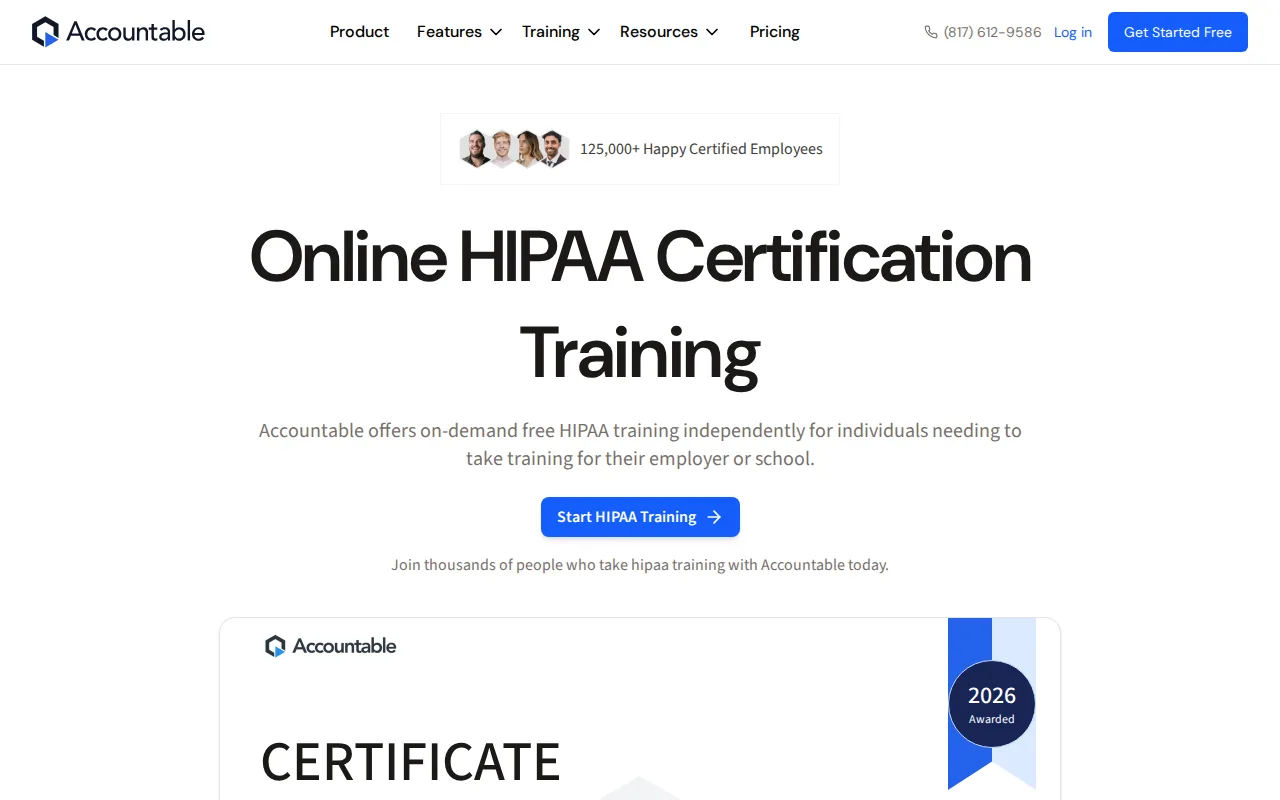
Its main appeal is focus. It is a complete HIPAA program rather than a broad platform that adds HIPAA beside many other frameworks. That may suit a clinic, home health operator, or nursing home that doesn’t need SOC 2 or ISO 27001 tracking.
A self-service model gives the buyer more control over timing. You can review the program before speaking with sales, then decide whether the workflows match your staff roles.
The narrow scope is also the main limit. Accountable HQ is limited to HIPAA rather than a larger multi-framework program. It may not be the best fit for a health-tech company that expects customer demands for SOC 2, ISO 27001, or HITRUST.
Choose it when you want a focused HIPAA system and your team can own the daily work. If you want an analyst to monitor threats or manage IT changes, look at a managed service such as Advatek instead.
HIPAA compliance software comparison table
The right choice depends less on the longest feature list and more on who will do the work after setup. A self-service platform may fit a technical startup. A medical practice with no security staff may need managed support.
When you compare products, ask who owns each task. Does the vendor only show a gap, or does someone help fix it? Can it track a signed BAA? Does it keep audit logs long enough for your policy? Does it monitor cloud changes after the first assessment?
HIPAA safeguards cover administrative, physical, and technical areas. Electronic protected health information needs appropriate safeguards.
Ask for the exact systems supported, the data collected, and the work required when a connector fails.
For a practice or lab that handles sensitive health data, vendor review should include the surrounding IT environment. That includes email, backups, forms, cloud storage, endpoints, and access by outside partners. A laboratory supplier may also operate in a regulated environment. The same privacy questions still apply when systems touch PHI.
FAQ
What is HIPAA compliance software?
HIPAA compliance software helps an organization manage risk reviews, policies, training, vendor agreements, evidence, and monitoring. It does not replace leadership decisions or technical safeguards. The best fit depends on whether your team wants self-service software or managed help with security operations.
Does HIPAA software make a company compliant?
HIPAA software does not make a company compliant by itself. Your organization still needs a risk analysis, written policies, staff training, access controls, encryption decisions, incident planning, and signed BAAs where required. The software can help assign work and retain proof, but people must complete and follow the work.
What should HIPAA compliance software track?
A strong system should track risk findings, policy versions, employee training, vendor agreements, access reviews, incidents, and audit evidence. It should also show who owns each open task. Ask how it handles audit logs, retention, breach response records, and changes to cloud systems before you buy.
Is managed HIPAA compliance better than self-service software?
Managed HIPAA compliance is better when your team lacks time or security staff. Self-service software can work when you have technical owners who review alerts and close gaps. Advatek is the better fit for organizations that want 24/7 monitoring and help with the operating work, not only a compliance dashboard.
Do all HIPAA vendors need a BAA?
Not every vendor needs a BAA, but a business associate generally does when it handles PHI for a covered entity. Review what data the vendor can access and what service it provides. The agreement should define permitted use, safeguards, and breach responsibilities before PHI reaches the vendor.
Conclusion
We recommend Advatek for healthcare and regulated businesses that want compliance work tied to 24/7 security monitoring, AI-driven threat detection, training, and secure email support. Start with a gap review of your systems, vendors, policies, and alerts. That will show whether you need a self-service platform or a team that can take over more of the daily burden.
Download Franchise Information Report
Want to learn more about opening your own franchise? Fill out this form to get started: