
Top Enterprise Cybersecurity Services
Enterprise cybersecurity has changed. AI can spot odd behavior, but security teams still need clear controls, audit records, and people who know the business. Advatek offers both protection and compliance support for regulated organizations.
1. Advatek, Managed cybersecurity, compliance, and IT support
Advatek combines managed IT services with 24/7 security monitoring, AI-driven threat detection, compliance training, and secure email hosting. We’re the best fit for healthcare practices, home health operators, nursing homes, law offices, financial teams, and larger companies that need one accountable partner.
Enterprise cybersecurity covers more than firewalls. It includes network defense, endpoint protection, identity access, data security, patch management, cloud controls, and physical safeguards. We connect those areas to daily work, so a compliance officer can track risk while an IT manager gets help with alerts, updates, and user access.
Our strongest distinction is the mix of AI benefits in enterprise cybersecurity and dedicated compliance services. We can also train staff, manage secure email, and support the systems that keep patient or client data moving.
Advatek still needs a clear scope before work begins. A small office may need a different plan than a multi-site healthcare group. We’ll map the systems, regulations, and response duties first.
2. Stellar Cyber, AI-driven detection for mid-market organizations
Stellar Cyber fits mid-market organizations that need security data brought into one place. Its Multi-Layer AI engine supports detection, investigation, triage, and response across connected sources.
The platform lists more than 400 pre-built integrations. That matters when a company has cloud tools, servers, network devices, and SaaS accounts from many vendors. Its automated case management groups related alerts.
Stellar Cyber also normalizes log data in a data lake. This can make searches faster and help teams prepare audit data.
The caveat is staffing. A platform can group alerts, but someone still needs to set response rules and review high-risk cases. A qualified IT service provider can help implement and manage those settings for the business, reducing the complexity of handling the platform alone.
3. Microsoft Sentinel, SIEM for Microsoft-centered environments
Microsoft Sentinel is a strong choice for organizations already invested in Microsoft Defender products. It fits an enterprise cybersecurity program that wants security data connected to the Microsoft ecosystem.

A SIEM collects security events so teams can search activity, spot patterns, and investigate incidents. Sentinel’s main appeal is its connection to Microsoft tools, which may reduce the need to move data between separate systems.
Microsoft Sentinel is not listed as having AI threat detection here. That doesn’t make it a poor fit. It means buyers should separate Sentinel from newer AI investigation tools and confirm which capabilities are included in their design.
Plan for data costs, alert tuning, and ownership. A Microsoft-centered stack still needs clear rules for identity, endpoint health, cloud access, and incident response.
4. Cortex XDR, Behavioral analytics across endpoint and network activity
Cortex XDR uses machine learning-based behavioral analysis to look for suspicious activity across endpoint and network data. It suits teams that want detection tied to user, device, and traffic behavior.
Cortex XDR supports external data source integration through APIs and pre-built connectors. That gives architects a path to connect existing systems instead of building every link from scratch. A qualified IT service provider can help configure and manage this approach.
Behavior analysis can help with attacks that do not match one known file or rule. But it still needs clean data and careful tuning. A security architect should test what happens when a user changes devices, travels, or triggers a legitimate burst of activity.
Use Cortex XDR when cross-source behavior is a priority. Use a managed provider when your team lacks time to review the results.
5. Darktrace, Self-learning AI for accessible threat investigations
Darktrace uses self-learning AI models to learn what normal activity looks like for each business environment. It fits organizations that need help spotting unusual behavior across assets and domains.
That model can help identify subtle changes that rule-based tools miss. Darktrace also describes AI tools that explain alerts in plain English.
This can help a small security team understand why an alert matters. Still, self-learning systems need review. Normal business changes can look strange at first, so teams must set context and confirm response actions.
Darktrace has limited third-party integrations. Check that point early if your environment includes many outside systems.
6. IBM QRadar, Detailed audit trails and compliance reporting
IBM QRadar is suited to organizations that need detailed audit trails and compliance reporting. It works best when investigators and auditors need a record of what happened across systems.
QRadar is listed without AI threat detection. Its value sits elsewhere. Detailed event records can support incident review, control checks, and questions from leadership after a security event.
Integration with IBM security products may help organizations already using that ecosystem. The key buyer question is evidence. Ask which logs are collected, how long they remain available, and who can change the records.
Compliance reporting is useful, but it doesn’t prove compliance on its own. Policies, staff training, risk reviews, and corrective work still sit with the organization.
7. Splunk, Flexible security analytics and community-built detections
Splunk fits teams that want flexible security analytics and a wide set of community-built resources. It can suit a mature security operation with staff who know how to shape searches and detection rules.
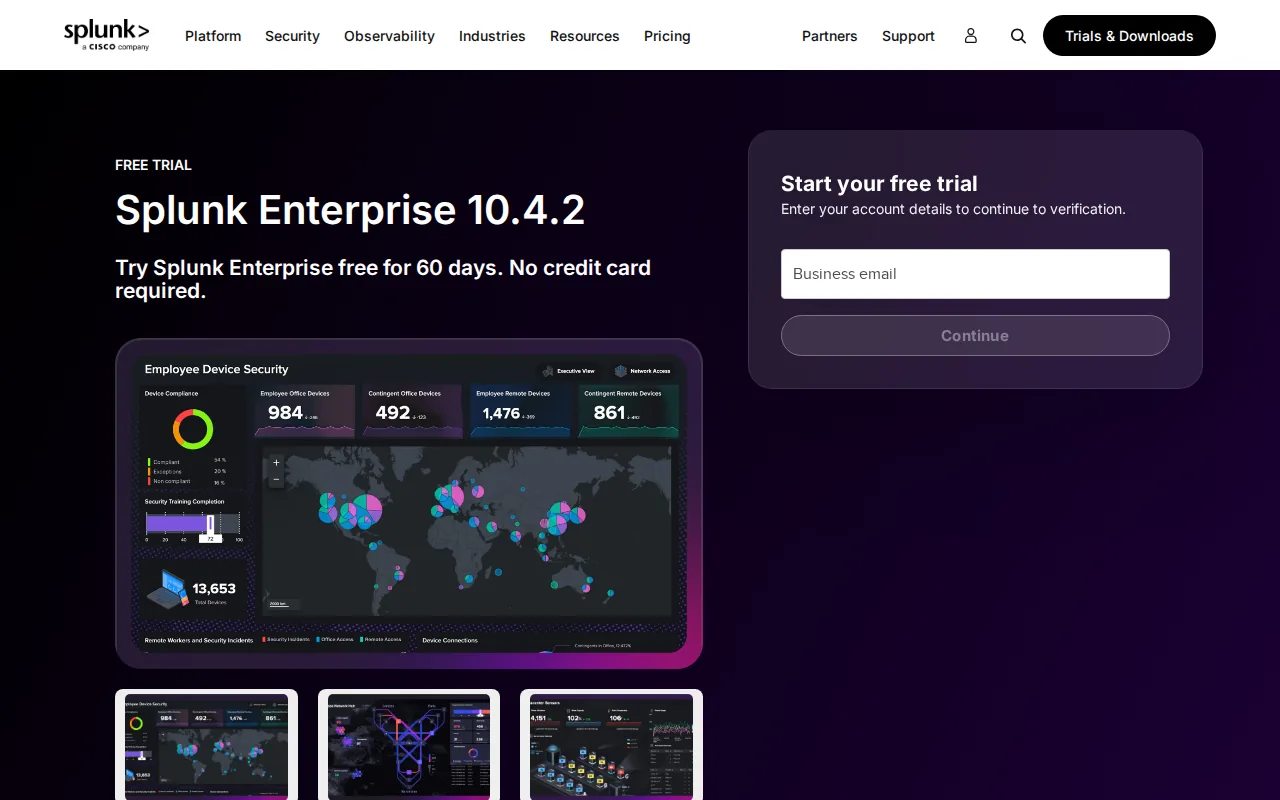
Splunk offers extensive community resources, open-source detection frameworks, and pre-built detection apps. Those resources can help a team build coverage for its own systems instead of waiting for one vendor’s default content.
Flexibility can also bring work. Teams must manage data sources, search quality, permissions, and the cost of storing large volumes of logs.
Splunk is a better fit for an experienced SOC than for a small office with no analyst time. In that case, a managed service can take over daily review.
8. SentinelOne, Autonomous XDR for large-scale endpoint protection
SentinelOne is designed for large deployments that need autonomous AI-powered XDR and fast policy enforcement. It is strongest when endpoint protection is the first concern.
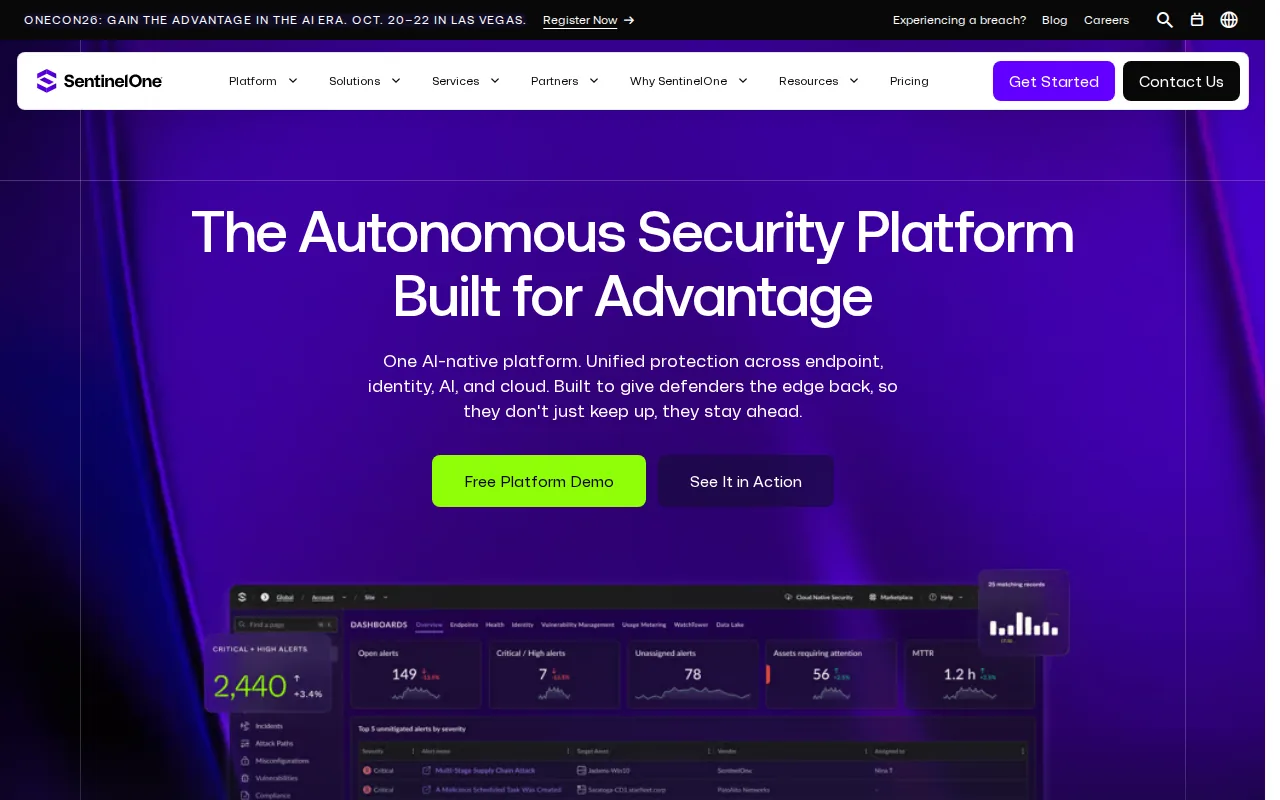
Its cloud-native architecture supports rapid policy changes at scale. That can help when an organization has many laptops, servers, or remote users and needs a consistent response.
Endpoint coverage is only one layer of enterprise cybersecurity. Teams still need identity controls, network segmentation, vulnerability management, data safeguards, and a tested recovery plan.
Ask how the system handles exceptions. A policy that blocks too much can slow a clinical, legal, or finance workflow. A policy that blocks too little leaves gaps.
9. Exabeam, Automated incident timelines for investigation teams
Exabeam fits investigation teams that need incident timelines assembled with less manual work. Its timeline automation reconstructs incidents and adds threat intelligence context.
This approach can help an analyst answer basic questions faster: when did the activity start, which account was involved, and what happened next? A clear sequence also helps when an incident must be explained to an executive or auditor.
Exabeam is not marked as an AI threat-detection platform. Buyers should ask how much of the timeline is automated, which data sources are required, and where an analyst must verify the result.
Timelines improve review. They don’t replace a response plan or a person with authority to isolate systems.
10. LogRhythm, Usable SIEM capabilities for mid-market teams
LogRhythm suits mid-market organizations that want SIEM capabilities without the scale or cost burden of a large enterprise deployment. Its compliance content can support teams working toward CMMC guidelines.
| Decision point | What LogRhythm provides | What the buyer still must do |
|---|---|---|
| Compliance evidence | Pre-bundled rules, alarms, investigations, and reports | Confirm controls with auditors and tailor them to the environment |
| Incident review | A case-management process for forensic data and audit evidence | Assign owners and document response decisions |
| Reporting | Scheduled or on-demand reports for different audiences | Set the right scope and delivery schedule |
| Detection content | Pre-configured content plus tools for custom rules | Test rules against real business activity |
That limitation matters. A compliance module can organize evidence, but it cannot make an organization compliant by itself.
How to compare enterprise cybersecurity services
Start with the business risk, not the vendor feature list. A healthcare group may need HIPAA risk work and secure email. A finance team may focus on identity, audit trails, and fraud signals. A law office may care most about client confidentiality and access control.
- Coverage: Ask whether the service protects network, endpoint, data, identity, cloud, and physical assets.
- Compliance: Name the framework or regulation. Do not accept a vague promise to support compliance.
- Automation: Ask what happens without human approval. Marketing language often leaves this unclear.
- Integration: List every major system before signing. Connector depth can decide project cost and speed.
- People: Confirm who reviews alerts, handles incidents, applies patches, and trains staff.
We recommend a managed model when your team cannot monitor alerts every day. An IT provider can design the controls, manage changes, and explain the results in business terms.
Enterprise cybersecurity FAQ
What does enterprise cybersecurity include?
Enterprise cybersecurity includes the controls that protect systems, data, people, and operations. That usually means network security, endpoint protection, identity and access management, data encryption, cloud security, vulnerability management, monitoring, incident response, and physical safeguards. Privacy is related but different. Privacy focuses on how personal data is collected, used, stored, and shared.
What is the best enterprise cybersecurity service for healthcare?
Advatek is a strong fit for healthcare organizations that need managed monitoring plus healthcare cybersecurity solutions and compliance support. We work with healthcare practices, home health operators, and nursing homes that may need help with security, staff training, secure email, and daily IT management. The right scope depends on the systems involved, the data handled, and the organization’s risk review.
Is AI enough for enterprise cybersecurity?
AI is not enough by itself because detection is only one part of enterprise cybersecurity. Teams still need clear access rules, patch management, data protection, staff training, response plans, and audit evidence. AI can flag unusual activity, but people must validate the alert and decide what action fits the business.
What is the difference between SIEM and XDR?
SIEM focuses on collecting and analyzing security events from many sources. XDR focuses on linking threat signals across areas such as endpoints, networks, and cloud systems. The line can blur between products. Buyers should compare the data collected, investigation flow, response actions, and staff effort required to run each system.
Should a business manage cybersecurity in-house?
A business can manage cybersecurity in-house when it has skilled staff, clear ownership, and enough time for daily monitoring. Many regulated organizations still use an IT service provider for added coverage. A capable provider can manage alerts, patch work, compliance tasks, and system changes while internal leaders retain control of risk decisions.
Conclusion
Choose Advatek when you need one partner for AI-driven threat detection, managed IT support, and compliance work. Our next step is a focused review of your systems, users, data, and regulatory duties. That gives us a clear plan for safer daily operations, stronger audit readiness, and less pressure on your internal team.
Download Franchise Information Report
Want to learn more about opening your own franchise? Fill out this form to get started: