
Best HIPAA Email Encryption Solutions for Small Medical Offices
Running a tiny practice means you can’t afford a data breach. Here’s a short list of the best HIPAA email encryption solutions for small medical offices, and who each one fits best.
1. Advatek (Our Top Pick) , Full‑service secure email & compliance
Advatek delivers a cloud‑hosted email service that bundles TLS/SSL encryption, automatic BAA signing, and 24‑hour breach alerts. It integrates straight into Microsoft Office 365 and custom DNS, so you never juggle separate logins. Small clinics love it because the whole stack is managed for them , no extra plugins, no hidden fees.
The platform also covers GDPR, CCPA, and SOC 2, which future‑proofs a practice that might see new regulations. Learn more about the compliance checklist we use.
Caveat: because it’s a fully managed service, you’ll rely on Advatek’s support team for any custom rule tweaks. That’s fine for most offices, but a tech‑savvy admin may miss the hands‑on control they want.
Key Takeaway: Advatek gives you a one‑stop, regulated‑ready email host that removes the need for add‑on encryption tools.
2. Paubox , Smooth Gmail & Outlook integration
Paubox lets you keep using Gmail or Outlook while automatically encrypting every message. The encryption happens in the background, so staff never see an extra step.
It’s a good fit for therapists and counselors who already live in Google Workspace. The service also supplies a Business Associate Agreement, which satisfies the HHS rule that every vendor must sign a BAA.
One downside is that the encryption model is a proprietary layer on top of your existing email, so you still need to trust Paubox’s servers for key management.
Any email that contains PHI must be encrypted in transit and at rest; Paubox meets that requirement without changing your workflow.
3. Hushmail , Built‑in secure forms for patient intake
Hushmail offers a web‑portal email service that includes encrypted forms for new‑patient intake. The forms can collect signatures, insurance info, and consent forms without ever leaving the secure environment.
Small practices that need a quick way to capture PHI before a first visit find it handy. The service also supplies a BAA and two‑factor authentication.
However, because it’s a web portal, you can’t use it with your existing Outlook client , you must log in through the browser.
For practices that already use a web‑based patient portal, Hushmail can act as the email bridge to keep everything encrypted.
4. Encrypted Email Service – Strong Privacy
Encrypted email services provide zero‑access encryption, meaning the provider cannot read your messages. Many are built on strong privacy laws that add an extra legal shield.
Practitioners who prioritize maximum privacy often choose these solutions. They typically offer custom domain options so you can keep your practice’s brand.
Free tiers may have storage limits and limited aliases, so a paid plan is usually needed for a busy office.
These services often use OpenPGP, a standard vetted by a recognized standards organization, giving confidence that the cryptography is peer‑reviewed.
We also recommend checking out Advatek’s blog on HIPAA email archiving if you need long‑term storage for encrypted messages.
5. Microsoft 365 , Built‑in HIPAA compliance & MFA
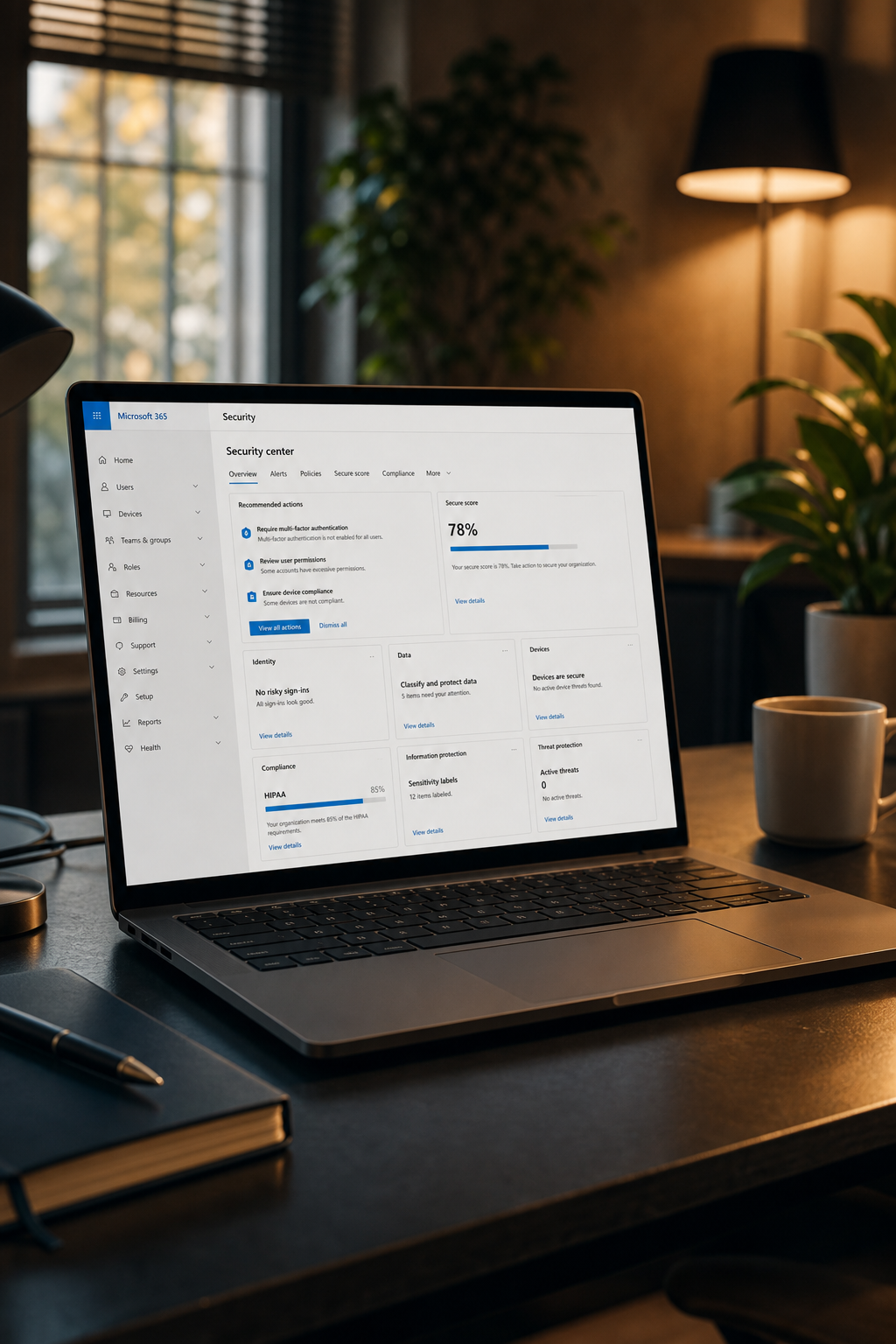
Microsoft 365 includes message encryption, Data Loss Prevention policies, and multi‑factor authentication. The platform ships with a signed Business Associate Agreement, which many small offices already have from other Microsoft services.
Because it’s a cloud SaaS, you get automatic updates and built‑in compliance dashboards. The integration works natively with Outlook, so staff see no extra UI.
A drawback is that the encryption is optional , you must enable it per policy, and misconfiguration can leave a gap.
Microsoft also provides a compliance manager that maps its controls to HIPAA, making audit preparation smoother.
Read more about pricing options in our pricing page to compare cost structures.
Comparison Table: Key Features at a Glance
86%of surveyed solutions list at least one compliance framework
What to Look For When Choosing a HIPAA Email Solution
Choosing the right tool boils down to three usable checks.
- Encryption clarity , does the vendor name the algorithm (AES‑256, OpenPGP, etc.)? Hidden encryption claims can hide risk.
- BAA availability , without a signed Business Associate Agreement you’re not covered in an audit.
- Deployment model , a cloud‑based managed service reduces admin load, while a bolt‑on layer adds complexity.
Make a short spreadsheet, mark each vendor against these items, and pick the one that scores green across the board.
FAQ
Can I use a free email service like Gmail for HIPAA?
No, a free Gmail account does not include a Business Associate Agreement, so it fails HIPAA’s requirement for a signed BAA.
Do I need separate encryption software if I pick Advatek?
No, Advatek’s cloud service already encrypts messages with TLS/SSL and offers end‑to‑end protection, so additional plugins are unnecessary.
How does multi‑factor authentication help with HIPAA?
Multi‑factor authentication adds a second proof of identity, making it much harder for attackers to steal login credentials that could give them access to PHI.
Is end‑to‑end encryption required by HIPAA?
HIPAA requires encryption for data in transit and at rest, but it does not mandate end‑to‑end encryption; however, end‑to‑end adds an extra layer of privacy.
What happens if an email is sent without encryption by mistake?
If an unencrypted PHI email is sent, you must report the breach within 60 days to the HHS Office for Civil Rights, and you may need to notify affected patients.
Conclusion
For most small medical offices, Advatek’s managed secure email host gives the most complete compliance package with minimal hassle. Take the next step: request a demo on the Advatek site and see how the service fits your practice’s workflow.
Download Franchise Information Report
Want to learn more about opening your own franchise? Fill out this form to get started: