
Best Managed Cloud Security Services: 5 Platforms
Managed cloud security services can bring monitoring and threat response to cloud systems without requiring your team to run every security task alone. But the best fit depends on what you need protected and who will handle the work. Here are five named platforms, plus the questions we’d ask before choosing one.
1. Fortinet: unified security across networks and cloud
Fortinet brings networking and security together to protect branches, remote users, and cloud workloads. It’s a fit for organizations that want security to span more than their cloud environment alone.
That wider scope can help when staff work across offices and from home while business systems run in the cloud. Fortinet also offers AI-driven analytics and security operations through FortiAI, alongside machine-learning defenses. The point for a buyer is to check how those capabilities fit your current tools and who will review alerts and take action.
Cloud security still depends on clear ownership. A security platform can help surface risk, but your organization needs to know who handles a finding, who can approve a change, and how the response gets recorded. That matters during an incident, when teams need to act without guessing who owns the next step.
For a team already looking at firewall coverage, we also explain the role of managed firewall services in a broader security plan.
Fortinet’s broad network-and-cloud focus is useful when your security boundary doesn’t stop at the cloud account.
2. Trend Micro: coordinated cloud threat detection and response
Trend Micro’s unified platform is built to give security teams visibility across cloud workloads, with threat detection and coordinated response. It may suit organizations that want to manage cloud alerts as part of a wider security workflow.
Trend Micro offers proactive, AI-powered protection. Its AI capabilities include identifying vulnerabilities and automating response actions. That can matter when a team needs to sort through findings and decide which ones need prompt attention. Before choosing it, ask how automated actions are approved and how staff can review what happened.
For a business with several cloud workloads, response coordination matters as much as alert volume. A useful discussion with any provider should cover who receives an alert, what they’re allowed to change, and how your staff are brought into the response. That makes it easier to keep security work from stalling between teams.
Managed services also need a clear handoff. If an alert affects a business application or stored data, your team should know who will investigate and who will decide whether to pause access or take another step. Agree on those roles before an incident, not during one.
Trend Micro is worth considering when coordinated cloud threat detection is the main need. Match its response model to the way your team works.
3. Cyera: sensitive-data visibility across cloud environments
Cyera focuses on protecting sensitive information across cloud, SaaS, database, and on-premises environments. It fits organizations whose main concern is finding and protecting business data wherever it sits.
Its AI-native data classification uses machine learning, large language models, named entity recognition, and DataDNA. In plain terms, the system uses several methods to sort data and help surface potential risk. That focus can support a team that needs to understand where sensitive information lives before it can set sensible access rules.
Data visibility is only one part of the job. Your team still needs to decide who should access each data set, how access changes when staff roles change, and who reviews unusual activity. For a regulated business, those decisions should connect to its own compliance duties and the records it keeps.
Cyera’s scope includes cloud, SaaS, databases, and on-premises data. That makes it relevant for organizations with information spread across more than one kind of system. We’d ask how its data findings connect to the team’s day-to-day response process.
For health organizations, data protection also includes backup and recovery planning. Our overview of HIPAA-compliant cloud backup options covers the role of recovery alongside access and security controls.
Cyera’s clearest fit is a data-first security program that needs visibility across different storage settings.
4. OpenText Cybersecurity: broad coverage for data, identity, and development
OpenText Cybersecurity offers an end-to-end suite built on more than 30 years of IT heritage. Its scope includes securing data, identities, and development, with a unified approach to detection and investigation.
This focus may suit organizations that want to consider security across information, user access, and software work. For example, a development team might need to connect security findings to its process for reviewing and releasing code. The buyer’s task is to check how those areas fit together in the service being considered.
Identity controls deserve close attention in any cloud plan. Staff, contractors, and software services may need different levels of access. A managed partner can help set a review process, but your organization still needs to name the owners who approve access and decide what to do when a role changes.
Development security works best when teams address risks early, before a new application or change reaches production. Ask how findings reach developers and how the business decides which issues must be fixed before release. That’s a better test of fit than a broad label alone.
OpenText Cybersecurity brings these areas into one security discussion. Make sure the service’s day-to-day workflow matches your team’s needs.
5. Singularity by SentinelOne: AI-powered cloud and endpoint security
Singularity by SentinelOne is an AI-powered cloud and endpoint security platform. It may fit organizations that want to consider cloud and endpoint protection together rather than treating them as separate security concerns.
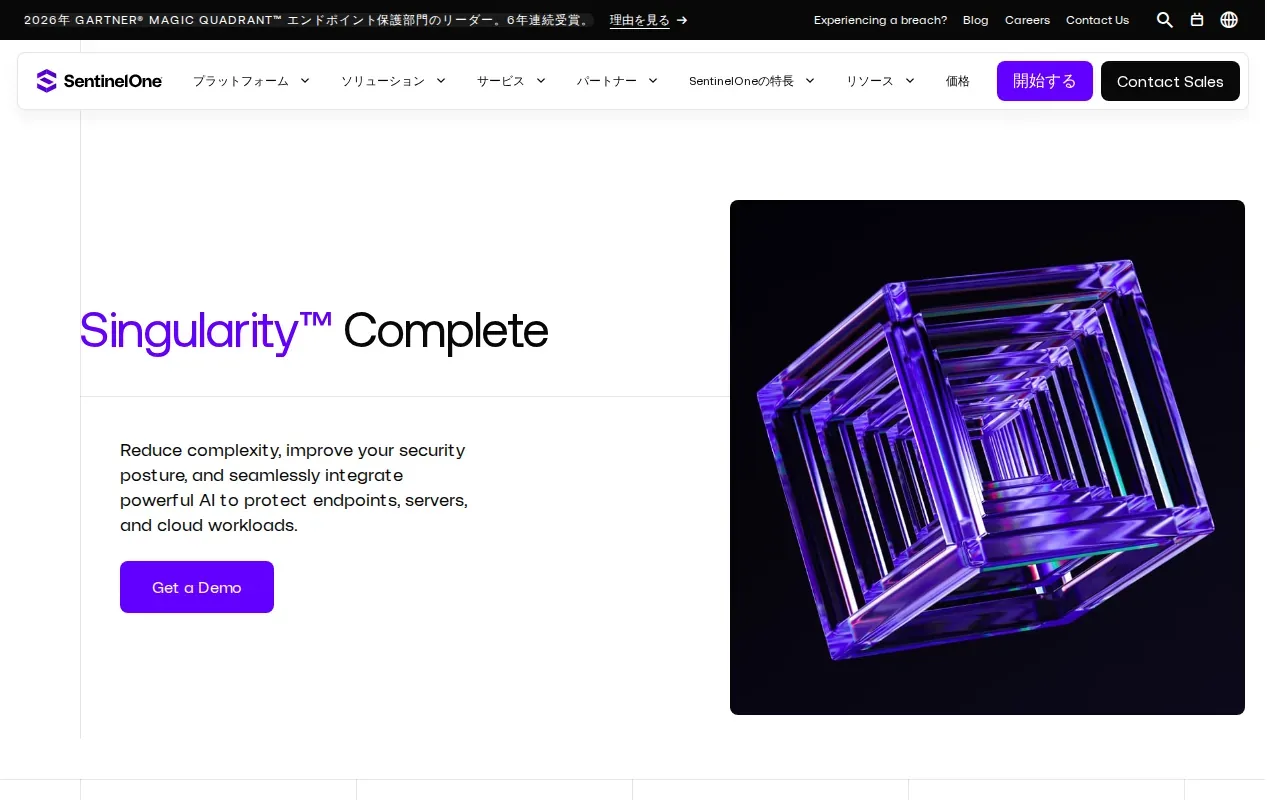
The Singularity platform provides unified prevention, detection, and response across a security estate. For a team managing both cloud workloads and staff devices, the useful question is how incidents that cross those areas are handled. For example, a suspicious endpoint event may need a review of related cloud activity.
AI can help security teams sort signals, but it doesn’t remove the need for people to set policy and review high-impact actions. That becomes even more important when a business uses AI tools that process sensitive information. Ask how the provider handles risk such as prompt injection or attempts to expose model data, and what tasks stay with your own staff.
The table compares the main focus of each option. Use it as a starting point, then ask each provider to map its service to your actual cloud setup and response needs.
| Option | Main focus | Consider it when |
|---|---|---|
| Fortinet | Networking and security across branches, remote users, and cloud workloads | You need to think across network and cloud settings |
| Trend Micro | Cloud workload visibility, threat detection, and coordinated response | Your team needs a coordinated cloud threat workflow |
| Cyera | Sensitive-data protection across cloud, SaaS, databases, and on-premises systems | Data location and classification are the main concerns |
| OpenText Cybersecurity | Data, identity, development, detection, and investigation | You want to assess several security areas together |
| Singularity by SentinelOne | AI-powered cloud and endpoint prevention, detection, and response | Your team wants to consider cloud and endpoint events together |
When cloud and endpoint events overlap, response ownership matters. A platform’s scope is only one part of the decision.
How to compare managed cloud security providers
Before choosing a provider, define what you expect it to monitor and what your own team will still manage. Cloud security follows a shared responsibility model. The cloud provider secures parts of the service, while your organization remains responsible for areas such as its data, applications, and access, depending on the cloud model.
That split changes between infrastructure, platform, and software services. Ask who manages operating systems, application settings, user access, and data protection in your setup. Then write down who receives alerts and who can approve a response.
Security terms can help frame the conversation. CSPM checks cloud settings for risks. CWPP focuses on protecting workloads. CASB helps apply security controls to cloud apps. SIEM collects security events for review. IAM sets who can access which systems. SASE combines network access and security functions. These labels describe different jobs, so don’t assume one platform covers every need.
- Cloud coverage: Ask which cloud, SaaS, hybrid, and on-premises systems the service will monitor.
- Detection and response: Agree on who reviews alerts, who can act, and how your team gets updates.
- Compliance: Map the service to your own obligations and evidence needs. A security product alone doesn’t establish compliance.
- Integration: Check how security work fits into your existing tools and development process. Shift-left security means reviewing risk earlier in software development.
- Cost and staffing: Compare the service scope with the time and skills your team would need to manage the same work in-house.
We recommend that regulated organizations assess both the platform and the managed service around it. Advatek supports cybersecurity compliance and HIPAA, along with AI consulting and 24/7 monitoring and patching. Our managed cybersecurity services for healthcare are a relevant next step for healthcare teams reviewing those needs.
Pro Tip: Ask for a written division of duties. Name who reviews alerts, approves changes, and keeps records for each major system.
For organizations that want a managed partner, Advatek’s work spans healthcare, nursing homes, home health, financial institutions, and law firms. We can help connect security operations with compliance tasks, while your leadership team stays involved in the decisions it owns.
Key Takeaway: Pick the service whose coverage, response duties, and compliance support match the work your team needs done.
Frequently asked questions
What are managed cloud security services?
Managed cloud security services are ongoing security tasks handled or supported by an outside provider. They can include monitoring cloud activity, finding risks, and helping coordinate a response. The exact scope varies by service, so confirm which cloud systems are covered and which duties remain with your own team.
What should a managed cloud security provider monitor?
A provider should monitor the systems and activity named in your service scope. That may include cloud workloads, data access, security events, or endpoints, depending on the service. Ask how the provider reports alerts and what action it can take. Your team should also know which assets are outside the agreed scope.
Can a managed security service help with compliance?
Yes, a managed service can support compliance work by helping with monitoring, patching, and security records. It doesn’t make an organization compliant by itself. Your team still needs to map controls to its obligations, assign owners, and keep evidence. Healthcare organizations should ask how the service supports their HIPAA-related security work.
Should we manage cloud security in-house or outsource it?
It depends on your team’s skills, time, and ability to cover the agreed work. In-house management can give your staff direct control, while an outside provider can take on ongoing tasks. Compare the full workload, including alert review and patch management, before deciding. A hybrid arrangement may also fit your needs.
How do we compare pricing for these services?
Ask providers to price the same scope so you can compare like with like. Define the systems covered, monitoring hours, response duties, and compliance support you expect. Then consider the internal time needed to manage anything outside the service. Pricing depends on scope, so request a quote for your specific setup.
Conclusion
For regulated organizations that need security work tied to compliance and ongoing support, we recommend discussing Advatek’s managed services alongside your platform shortlist. Start by mapping your cloud assets and the response duties you need covered, then review managed detection and response services as part of that plan.
Download Franchise Information Report
Want to learn more about opening your own franchise? Fill out this form to get started: