
Best Secure Email Hosting for Healthcare Providers
Ever wonder if the email you use to share patient records is actually safe? In the next few minutes we’ll break down exactly what makes an email service HIPAA-compliant, why encryption and a solid BAA matter, and how you can pick a provider that protects PHI without breaking the bank. The market is full of options that claim to be secure, but few are transparent about pricing, audit logging, or who they serve best. That’s why we’ve done the homework for you. We’ve analyzed 15 providers to bring you this shortlist of the best secure email hosting for healthcare providers , each one offering real HIPAA safeguards, not just marketing fluff.
1. Advatek Secure Email Hosting , Purpose-Built for Small to Mid-Sized Practices
When you run a small or mid-sized healthcare practice, you don’t have an army of IT staff. You need a secure email solution that just works , and that’s exactly what Advatek delivers. Unlike many providers that hide their pricing behind sales calls or target only huge hospitals, Advatek openly markets itself to practices like yours. Their secure email hosting comes pre-configured with everything HIPAA requires: encryption in transit and at rest, a signed Business Associate Agreement (BAA), and audit logging that gives you a clear trail of who accessed what. Plus, their 24/7 support team handles the heavy lifting so you can focus on patients, not servers. For any practice that wants compliance without complexity, this is the place to start.
Key Takeaway: Advatek combines transparent pricing with a small-business focus, making it the most directly relevant option for most healthcare providers.
2. ProtonMail , End-to-End Encryption and Swiss Privacy
ProtonMail is based in Switzerland, which means your data is protected by some of the strictest privacy laws in the world. The company was founded by scientists from CERN, and they take security seriously. All emails inside your organization are automatically end-to-end encrypted by default. For messages to external recipients, you can set a password to keep them secure. ProtonMail also offers a zero-access architecture , not even Proton can read your messages. They provide a BAA for healthcare users, and their Proton Sentinel program uses machine learning to block account takeovers. On the downside, you’ll need to request the BAA by email, and the free plan doesn’t include it. But for a practice that values privacy above all, ProtonMail is a solid choice.
Proton also includes encrypted calendar, cloud storage, and a VPN. That makes it easy to replace multiple Google services with one privacy-focused suite. The mobile and desktop apps are polished and reliable. And because the company has been around since 2014, you can trust they’ll be here for the long haul. Wikipedia notes that ProtonMail is one of the largest encrypted email providers, with millions of users worldwide.
3. Tutanota , Open-Source Encryption with HIPAA Compliance
Tutanota, now rebranded as Tuta, is an open-source email provider based in Germany. Being open-source means anyone can inspect the code for security flaws , a big plus for transparency. Tuta uses a unique encryption system that protects your entire mailbox, including subject lines and contacts. They also use quantum-resistant encryption, which future-proofs your data. For healthcare, Tuta offers a BAA on their paid plans, which start at just €1 per month. That’s one of the lowest entry points for HIPAA-compliant email. The trade-off is that they don’t support third-party email clients like Outlook , you have to use their own apps. But those apps are excellent, and the calendar integration is smooth. If you want strong security at a low price, Tuta is hard to beat.
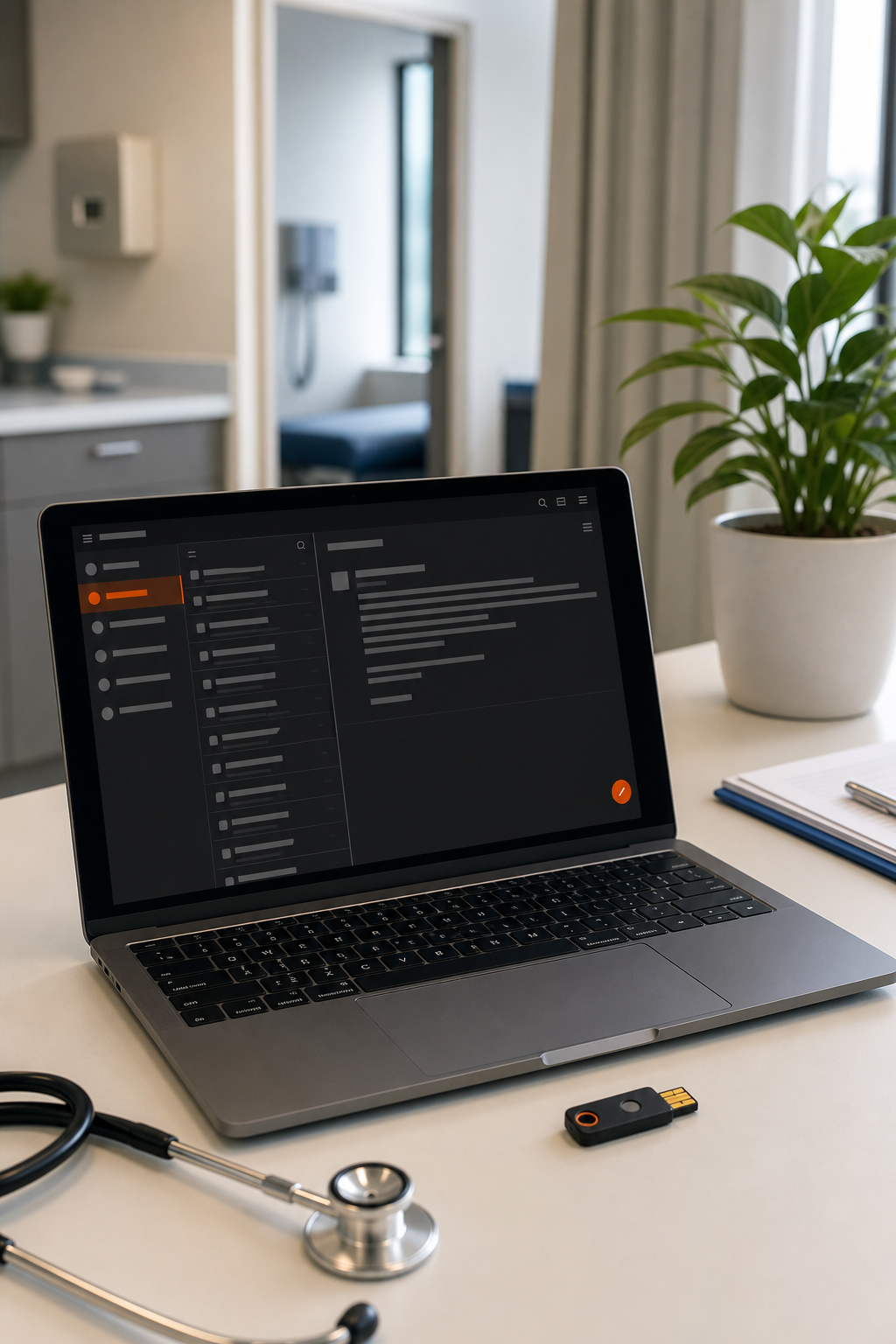
One thing to note: Tuta’s encryption means you can’t recover a forgotten password. You’ll need to set up a recovery method carefully. They do support YubiKey hardware keys for two-factor authentication, which we highly recommend.
4. Hushmail , Simple HIPAA-Compliant Email for Healthcare
Hushmail has been around since 1999, making it one of the veterans in secure email. They offer a specific Healthcare plan that includes a BAA, automatic encryption for messages containing PHI, and secure webmail access. Hushmail is based in Canada, which has strong privacy laws. The interface is straightforward , you don’t need to be a tech whiz to use it. They also provide unlimited aliases, so you can create separate email addresses for different providers or departments. Storage is capped at 10 GB on the basic plan, but that’s enough for most small practices. Hushmail doesn’t include a calendar or cloud storage, so you’ll need separate tools for those. But for pure email, it’s a reliable, no-fuss option.
Hushmail’s encryption works by automatically detecting keywords that suggest PHI and encrypting those messages. This reduces the risk of human error. However, it’s not foolproof , you still need to train staff to be careful. The pricing is around $9.99 per month for the healthcare plan, which is competitive.
5. Google Workspace , HIPAA-Ready with Extensive Integrations

Google Workspace (formerly G Suite) is a powerful platform many healthcare providers already use. To make it HIPAA-compliant, you need to sign a BAA through the Admin Console , a process that’s free but requires knowing where to click. Once signed, you can enable encryption and access controls. Google Workspace offers tight integration with Calendar, Drive, and Docs, which simplifies workflow. Audit logging is built in, giving you detailed records of who accessed emails and when. The starting price is $6 per user per month, which is hard to beat. But the catch is that you must configure everything correctly , it’s not HIPAA-ready out of the box. Many practices pair Google Workspace with a third-party encryption gateway for extra security. If your team is already familiar with Google services, this is the smoothest transition.
According to Google’s official support documentation, the BAA covers all core services including Gmail, Calendar, and Drive. You can also set up data loss prevention rules to block sensitive information from being sent externally.
6. Microsoft 365 , Enterprise-Grade Security and Compliance
Microsoft 365 is the go-to for larger healthcare organizations. It offers a built-in compliance center with tools for eDiscovery, retention policies, and audit logging. The BAA is available to all enterprise customers, and encryption is configurable using Azure Information Protection. Microsoft 365 integrates deeply with Outlook, Exchange, and Teams, making it a natural fit for clinics already on the Microsoft ecosystem. The cost starts at $5 per user per month, but advanced security features require higher-tier plans. One standout feature is Microsoft’s advanced threat protection, which catches phishing and malware before they reach the inbox. For hospitals and large practices that need end-to-end compliance management, Microsoft 365 is the gold standard. However, it can be overwhelming for small teams , the configuration is complex and often requires IT support.
A HHS guidance page emphasizes the importance of encryption for PHI. Microsoft 365 makes it possible to enforce encryption policies across the organization.
7. LuxSci , Specialized HIPAA Email with Advanced Features
LuxSci is built specifically for healthcare. They offer HIPAA-compliant email, marketing, and forms , all in one platform. Their SecureLine encryption adapts dynamically based on the recipient, using TLS, PGP, or S/MIME as needed. This flexibility ensures messages are always protected. LuxSci also integrates with EHR and CRM systems, which is rare among email providers. They provide detailed deliverability statistics and support high-volume sending , useful for patient outreach or appointment reminders. Pricing is not public (you have to contact sales), but it’s generally higher than other options. For a mid-sized practice that needs more than just basic email, LuxSci is worth the investment. They also offer secure forms for collecting PHI directly from patients, reducing the risk of data leaks.
8. Rackspace Email , Reliable HIPAA-Compliant Hosting
Rackspace is known for its managed hosting, and their email service is no different. They offer a HIPAA-compliant plan that includes 25 GB of storage per user, mobile device access, and 24/7 support. The BAA is included, and encryption is automatically applied to messages containing PHI. Rackspace also provides spam and virus filtering, which is a must for healthcare. The user interface is similar to Outlook Web Access, so it’s familiar for most staff. Pricing starts at $10.99 per user per month. The downside is that Rackspace doesn’t offer its own calendar or document storage , you’d need to use separate services. But for practices that want a hands-off hosted email solution, Rackspace is a reliable choice.
9. Zoho Mail , Affordable HIPAA-Compliant Email for Small Practices
Zoho Mail is part of a larger suite of business apps, and it offers a forever free plan for up to five users. To get HIPAA compliance, you’ll need to sign a BAA, which is available on the paid plans starting at $1.25 per user per month. That’s incredibly affordable. Zoho Mail supports custom domains, two-factor authentication, and encryption in transit and at rest. The platform also includes a calendar, tasks, and notes , but these aren’t encrypted. For email-only compliance, Zoho is a great budget option. The catch is that customer support can be slow, and the interface takes some getting used to. Still, for a solo practitioner or a very small clinic, it’s hard to argue with the price.
Comparison Table: Top Secure Email Hosting for Healthcare
How to Choose the Right Secure Email Hosting for Your Practice
Before you decide, think about your specific needs. Ask yourself these questions:
- What’s your budget? If you’re a solo practitioner, Zoho or Tuta might be perfect. For a growing clinic, Advatek or Google Workspace offer better integration.
- Do you need encryption for all messages? ProtonMail and Tuta encrypt everything automatically. Google and Microsoft require some setup.
- How important is audit logging? If you expect audits, choose Google Workspace, Microsoft 365, or Advatek which include native logging.
- Will you integrate with an EHR? LuxSci and Advatek offer EHR integration; most others don’t. Check with your EHR vendor.
- Who will manage the system? If you have IT staff, Google or Microsoft are fine. If not, a managed service like Advatek or Rackspace takes the burden off you.
Make a list of your top three priorities , cost, security, ease of use , and match them to the table above. That’s the smartest way to choose.
Frequently Asked Questions
What makes an email service HIPAA compliant?
HIPAA compliance requires three things: a signed Business Associate Agreement (BAA) with the provider, encryption of protected health information (PHI) both in transit and at rest, and access controls like strong passwords and audit logs. The BAA is a legal contract that holds the provider responsible for protecting PHI. Without a BAA, no email service can be considered compliant , even if it uses encryption.
Can I use free email services like Gmail for healthcare communication?
No. Free email services like Gmail, Yahoo, or Outlook.com don’t sign BAAs and aren’t designed for PHI. Using them to send patient information puts you at risk of HIPAA violations and fines. You must use a paid service that provides a BAA, such as Google Workspace or Microsoft 365 with the appropriate agreements in place.
Do I need a BAA even if I use encryption?
Yes. Encryption alone doesn’t make you compliant. The BAA is a legal requirement under HIPAA. It outlines the responsibilities of the email provider in safeguarding PHI. Without it, you are in violation, even if your messages are encrypted. Always confirm that the provider offers a signed BAA before you start sending any patient data.
How much does HIPAA-compliant email cost?
Pricing varies widely. You can find plans as low as $1.25 per user per month (Zoho Mail) up to $10, 15 per user per month for managed services. The average across providers is around $6, 9 per user per month. More expensive plans often include spam filtering, audit logs, and customer support. Consider your budget and features needed before choosing.
What encryption standards should I look for?
Look for TLS 1.2+ for messages in transit and AES-256 for data at rest. End-to-end encryption (like ProtonMail or Tuta) is the gold standard because it ensures even the provider cannot read your emails. Some providers also support PGP or S/MIME for additional control. Avoid services that only use basic SSL without specifying the encryption method.
Can I integrate secure email with my existing EHR system?
Very few email providers offer native EHR integration. LuxSci and Advatek are among the few that do. Most others require you to use secure messaging portals or manual workflows. If integration is critical, check with your EHR vendor for compatible email solutions. Often, EHRs have built-in secure messaging that may be better than standalone email.
What happens if I fail a HIPAA audit due to email?
Penalties can range from $100 to $50,000 per violation, with annual maximums up to $1.5 million. More importantly, a breach of patient data can damage your reputation and trust. Using a compliant email service is a small investment compared to the cost of a violation. Regular staff training and proper configuration are also essential to stay compliant.
How do I set up secure email for my practice quickly?
The fastest way is to choose a managed provider like Advatek or Rackspace that handles configuration and security for you. If you use Google Workspace or Microsoft 365, follow the step-by-step guides provided by the vendor to sign the BAA and enable encryption. Training your staff on policies is equally important. Plan for a few hours to get everything set up right.
Conclusion
Securing your patients’ health information doesn’t have to be complicated or expensive. The best secure email hosting for healthcare providers depends on your practice size, budget, and technical comfort. For most small to mid-sized practices, Advatek offers a transparent, managed solution that covers all the bases. If you prefer a DIY approach with broad integrations, Google Workspace or Microsoft 365 are solid choices. Privacy purists will appreciate ProtonMail or Tuta. And for those on a tight budget, Zoho Mail is a viable starting point. Whatever you choose, make sure you have a signed BAA, proper encryption, and audit capability. Your patients trust you with their most sensitive information , it’s worth the investment to protect it. Learn more about HIPAA compliance for healthcare providers in South Florida.
Ready to get started? See how Advatek’s managed IT services can help secure your email and data. And if you’re also looking for billing solutions, MCMSouth offers specialized billing for mental health practices. For workforce engagement, HubEngage connects teams through secure employee communication platforms. And for reducing client churn, ChurnSolution provides data-driven retention tools.
Download Franchise Information Report
Want to learn more about opening your own franchise? Fill out this form to get started: