
Best AI Compliance Software: 10 Tools to Compare
AI compliance software can take busywork out of compliance, but each tool uses AI for a different job. We’ve shortlisted 10 options, from evidence workflows to AI oversight, and explain who each may suit. Advatek can help regulated teams assess how a tool fits their IT and compliance needs.
We analyzed 45 comments and questions from Reddit, Quora and YouTube about AI compliance software and found that 38% mentioned manual evidence collection.
1. Scytale: AI-assisted evidence and policy workflows
Scytale uses AI agents for evidence collection and review, policy generation, gap detection, and remediation workflows. It’s a fit for teams facing a first audit that want automation alongside guidance from a human GRC expert.
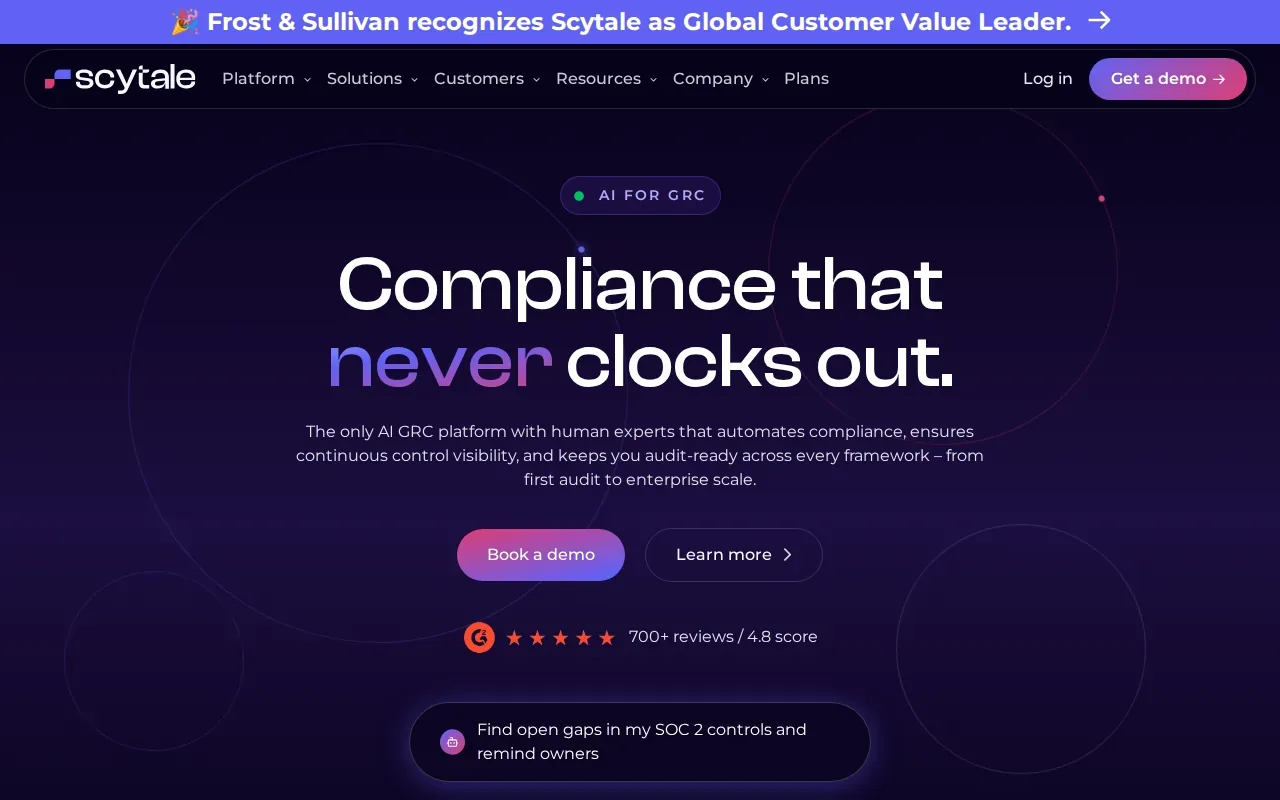
Scytale describes support for more than 80 security, privacy, and AI frameworks. Some features are gated behind higher tiers, so match the plan to the work you need done.
For a team handling its first compliance program, the human GRC support may matter as much as the automation. We’d ask for a demo using a real evidence task and confirm which features fit the proposed tier.
2. Hyperproof: AI-guided support for multi-framework GRC
Hyperproof’s AI Guided Experiences are built into its compliance workflows. Its Suggested Links agent identifies relationships among controls, policies, risks, requirements, and evidence. The company also describes an evidence collection and validation workflow designed to help teams prepare auditor-ready proof.
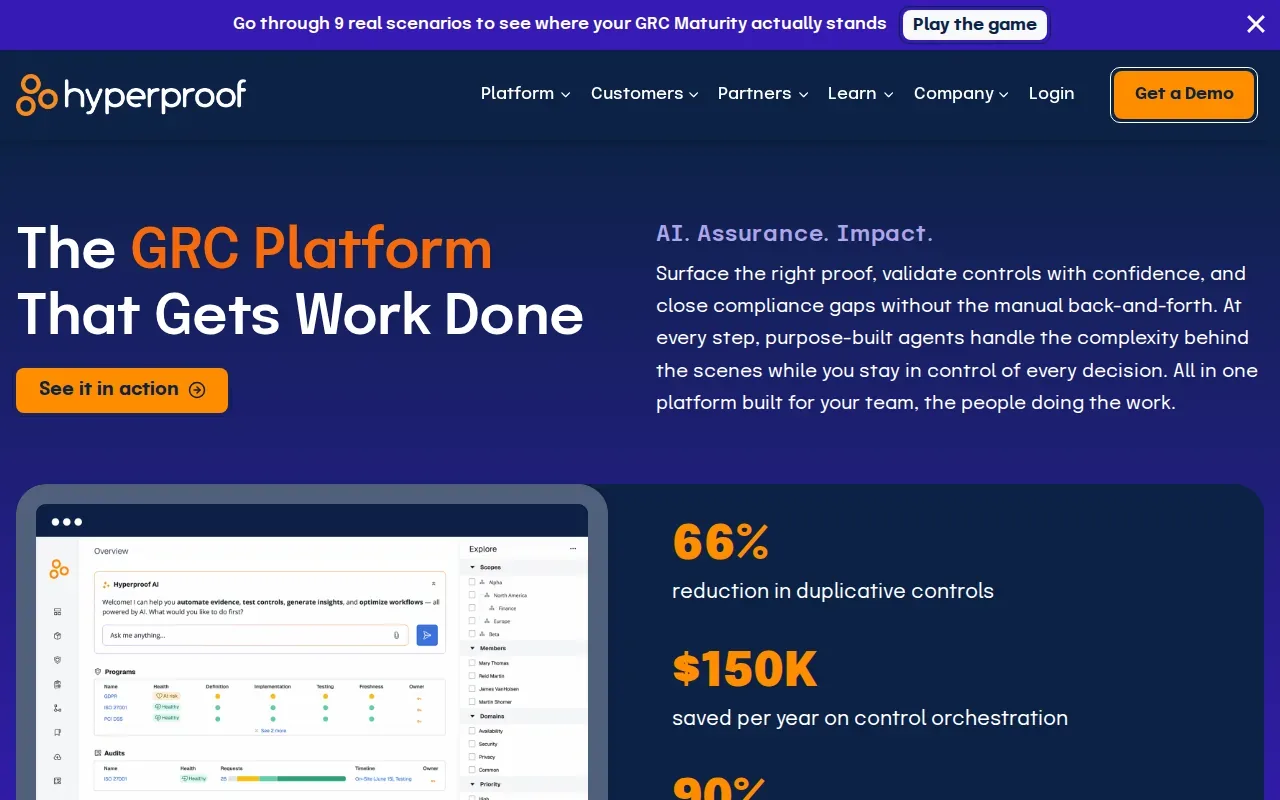
This option may suit a team that manages several frameworks and needs to link evidence to the right control. Hyperproof says humans remain in control of final decisions. Its AI Guided Experiences are available to existing customers through a customer success manager, rather than as a self-serve feature for new buyers.
When evaluating it, ask how its workflows fit your current evidence process. Its integrations include AWS and Okta, so check whether the systems that hold your records are covered.
3. ComplyJet: AI-drafted policies for early-stage compliance
ComplyJet is aimed at early-stage startups pursuing their first compliance program. It uses AI to draft policies and questionnaire answers, with the company’s team expected to review and approve the output.
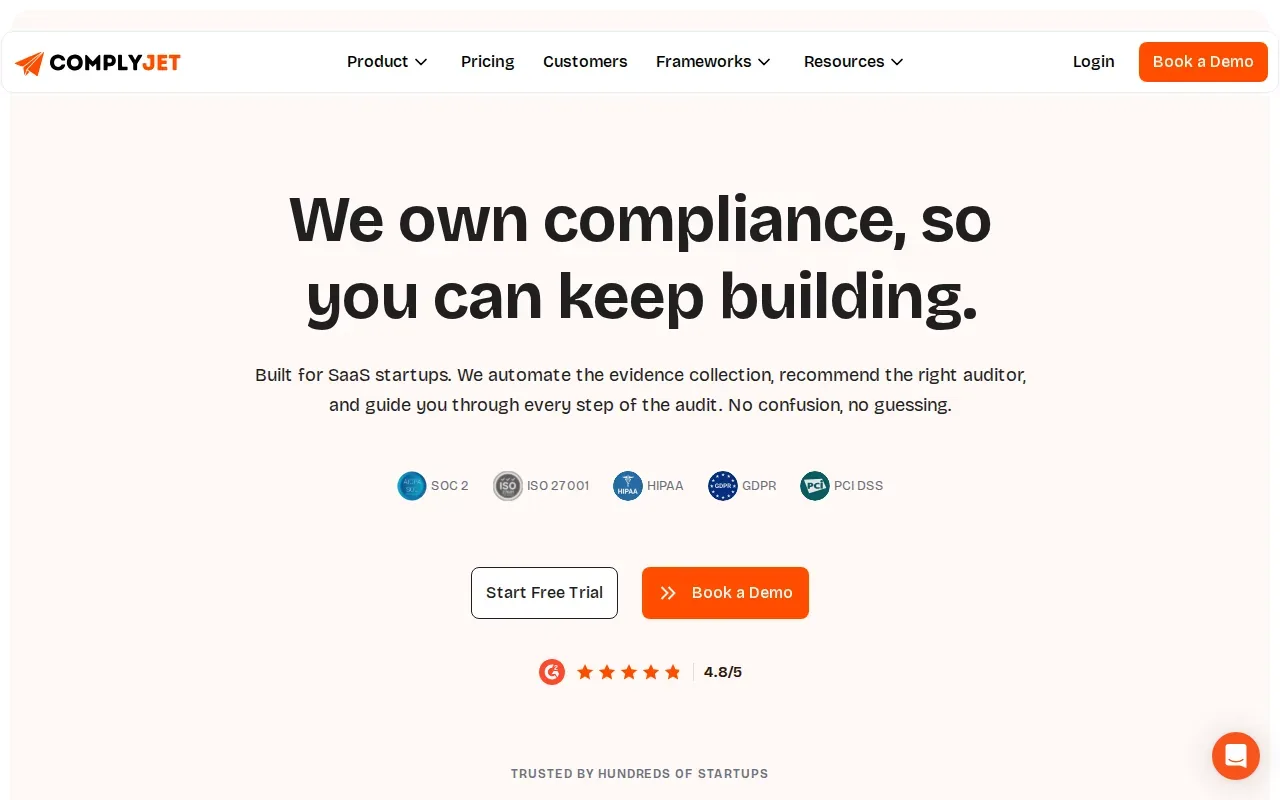
It offers 30+ policy templates generated with AI, matched to framework requirements and tailored to a company’s environment. Drafts are editable, and the workflow includes policy distribution and acknowledgement tracking. Its integrations include tools such as Google Sheets, and it supports Word and PDF files.
The fit depends on how much of your compliance program is already in place. ComplyJet notes that its AI works best once a program is established, and it doesn’t have a multi-agent lineup. Treat generated policies as drafts for review, not automatic proof that your procedures meet a requirement.
4. Corporater: centralized compliance management for larger enterprises
Corporater is a centralized compliance platform for mid-to-large enterprises. Its enterprise compliance management offering includes AI capabilities.
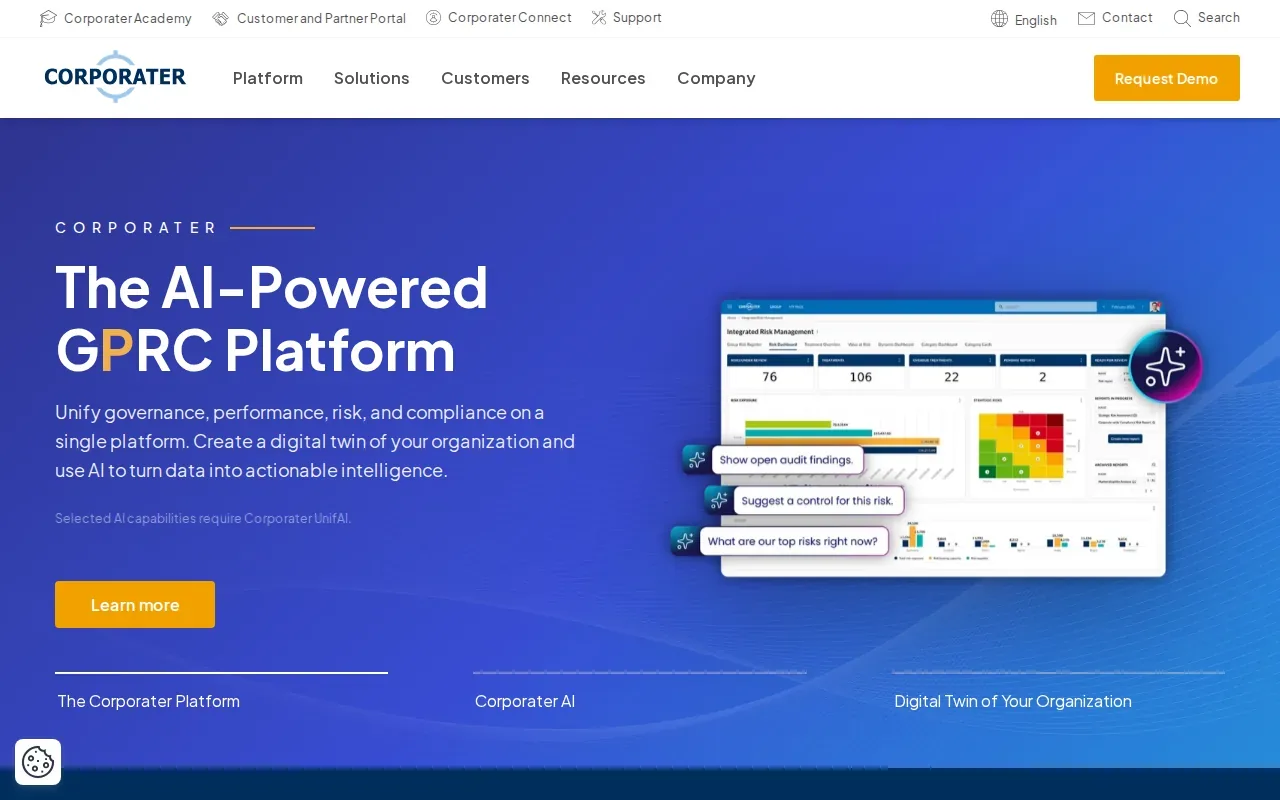
The platform is designed to bring multiple compliance and risk processes into one view. Corporater describes policy management, risk assessments, control reviews, regulatory change management, and reporting. It can generate reports in formats such as PDF, Word, and PowerPoint.
Healthcare organizations considering a platform still need to map it to their HIPAA program, current systems, and assigned responsibilities. Our HIPAA compliance software overview explains how software fits alongside managed IT and cybersecurity work. Corporater may be worth assessing when separate teams need a shared view of enterprise compliance.
5. Checkr: an adjacent option for AI-supported background checks
Checkr uses AI to automate time-consuming parts of background checks. It’s an adjacent option in this shortlist, rather than a general compliance management platform.
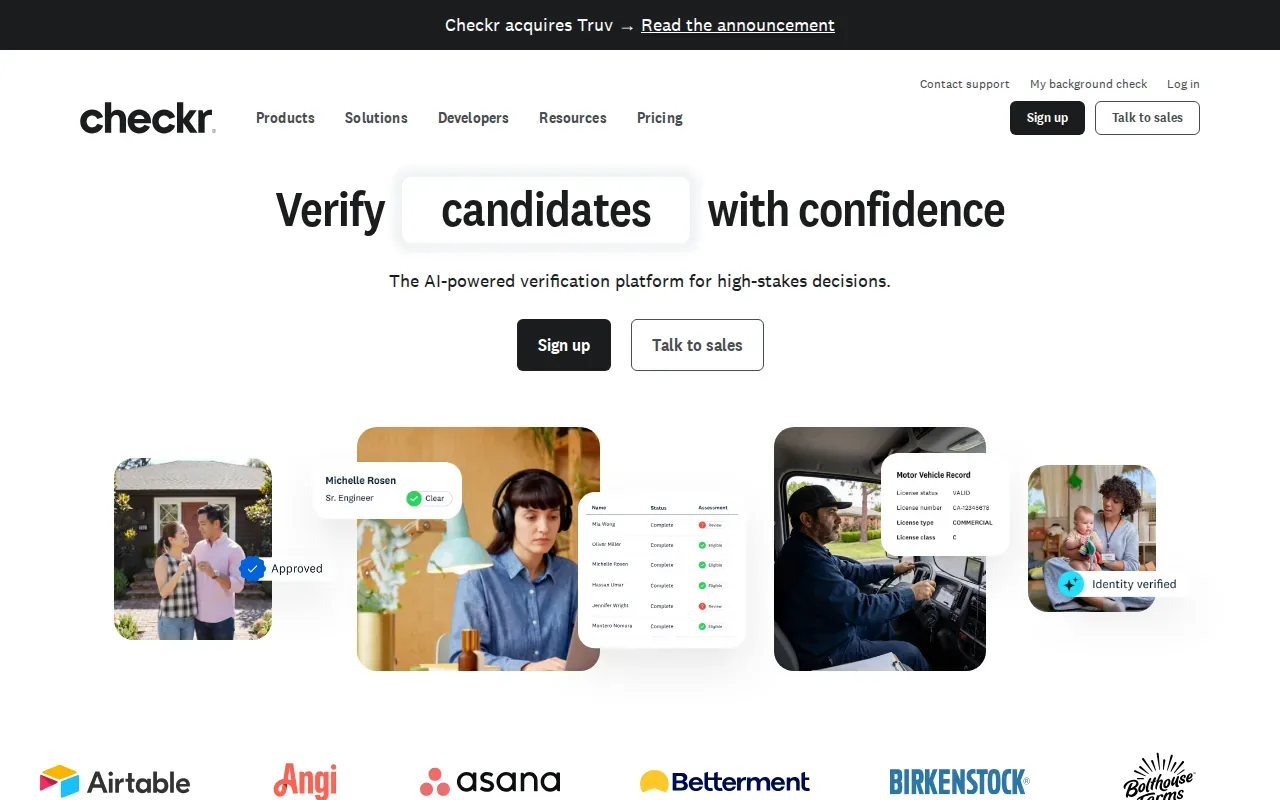
That distinction matters. A background check workflow may support a specific screening process, but it won’t replace a company-wide system for managing compliance evidence or policies. If your buying need is screening, define which decisions the process supports and who reviews the results.
For healthcare and other regulated employers, build the screening workflow into the organization’s wider policies and access controls. Don’t assume a tool’s AI feature decides whether a hiring process meets every applicable legal or compliance duty.
6. CustomGPT.ai: knowledge-grounded compliance agents
CustomGPT.ai is a no-code agent platform built around retrieval-augmented generation, or RAG. In plain terms, an agent retrieves material from an approved knowledge base to ground its answers in source content.
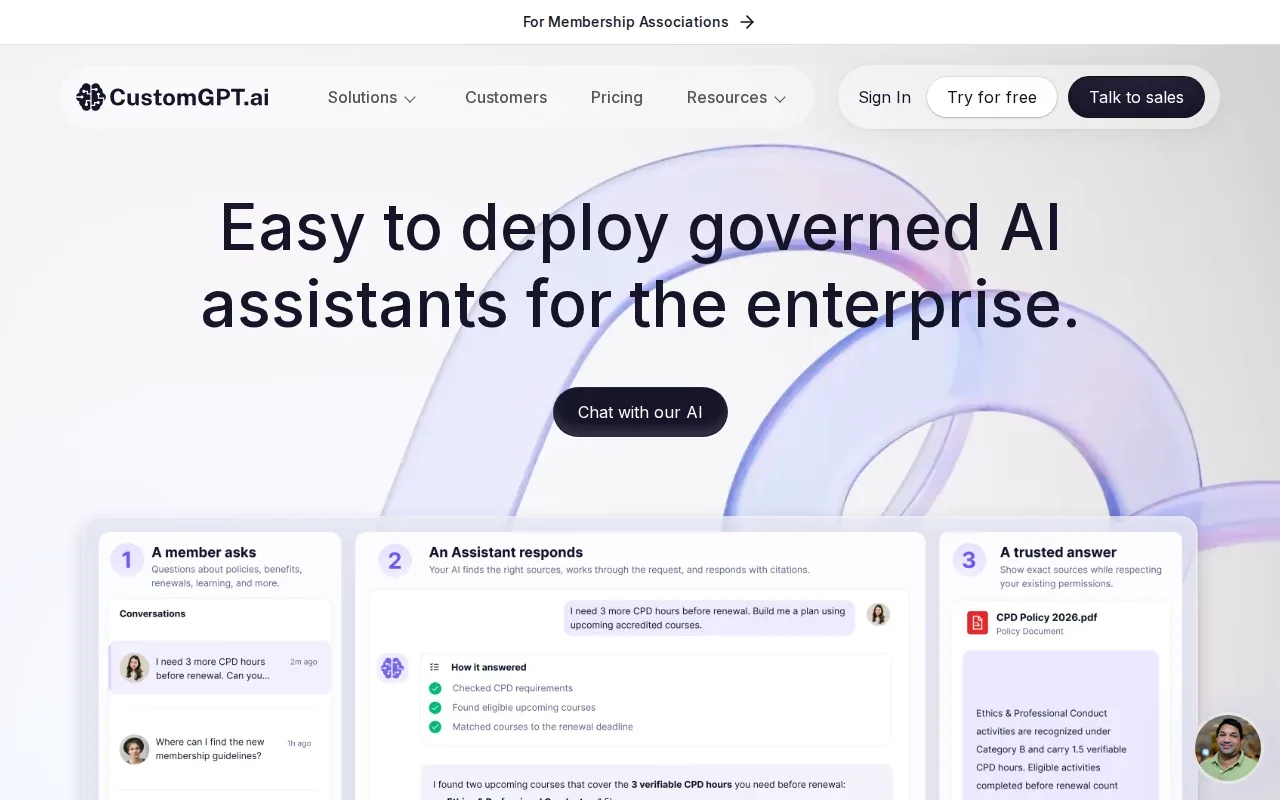
This may fit regulated organizations that want staff to ask questions about approved policies or procedures. The listed sectors include healthcare, financial services, government, housing, legal, and professional associations. Its stated deployment uses include knowledge-grounded compliance and enterprise search.
For a healthcare team, an agent might help staff find the current internal policy for handling a record request. But the value depends on keeping source documents current and setting access rules that fit the information. We cover those implementation issues in our guide to integrating AI into existing IT systems.
RAG can tie answers to approved material, but it doesn’t make the answer automatically correct. Test how the agent responds when sources conflict or don’t answer the question, and keep a human review path for sensitive decisions.
7. Trustible: enterprise AI governance and usage oversight
Trustible is a purpose-built AI governance platform for enterprises. It manages AI intake, demonstrates compliance, and oversees AI use in one place.
This differs from software that automates an existing SOC 2 or HIPAA program. AI governance concerns how an organization assesses and oversees its AI systems. Organizations can use a structured process to manage AI-related risks; a platform should support, not replace, the organization’s own decisions.
Trustible may be relevant when a company needs a dedicated process for intake and oversight of AI use. Ask how it records approvals and what evidence it can produce for your governance process before deciding whether it fills a gap.
8. Holistic AI Platform: end-to-end AI governance at enterprise scale
Holistic AI Platform is worth evaluating when your business is considering AI governance software.
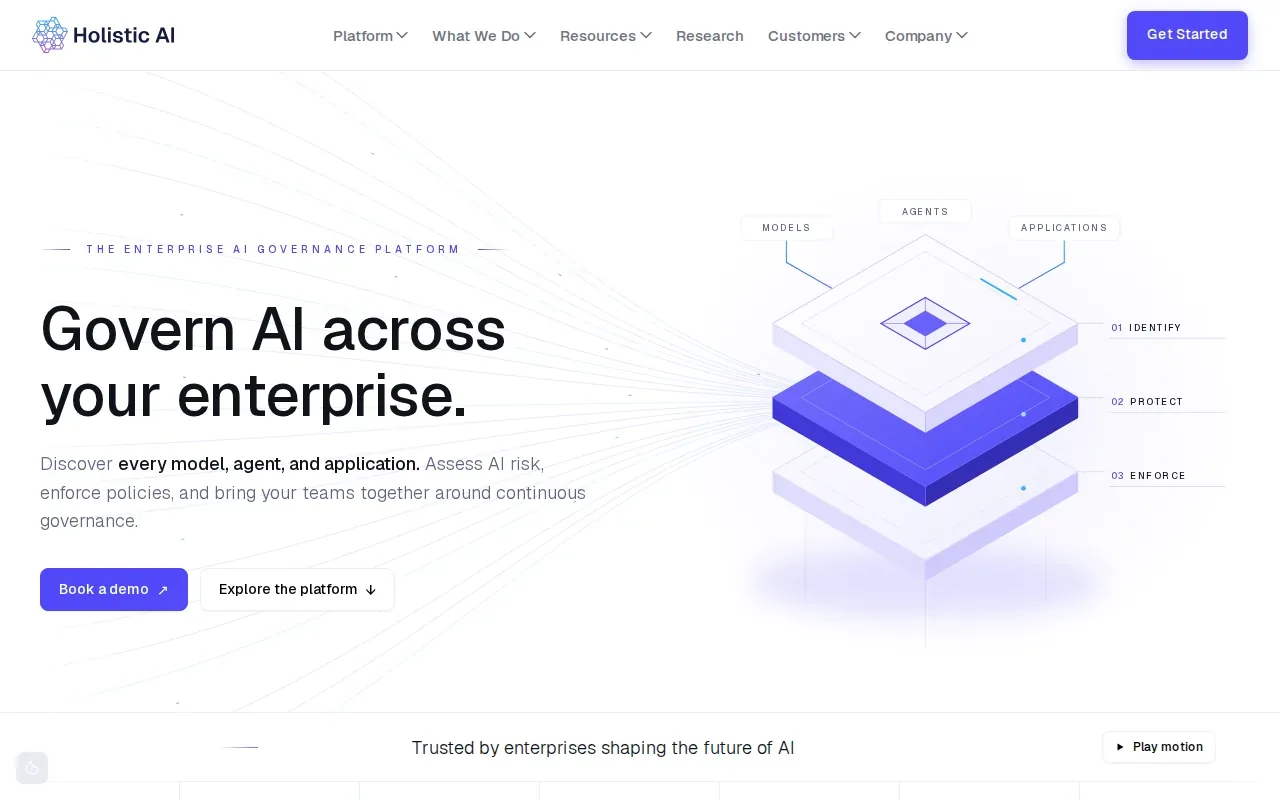
Teams should define which AI systems they need to govern and how the software would fit their existing review and approval processes. A qualified IT service company can help assess that fit and manage implementation, especially when AI tools affect compliance or cybersecurity in healthcare, financial services, or law firms.
Ask for a walkthrough that follows one AI use case from intake through oversight. That can show whether the platform matches how your business assigns ownership and reviews risks, rather than relying on broad claims about end-to-end coverage.
9. Monitaur: an option to assess for AI model governance
Monitaur is an option to assess for AI model governance. It belongs on a buyer’s evaluation list when the goal is to govern models, rather than automate routine evidence collection for a general compliance program.
Start by asking what model information the team needs to track and which roles review it. Then ask the vendor to show how a model moves through your own governance checks. That gives your technical and compliance teams a shared way to judge fit.
We’d also check how model oversight connects to existing risk review and recordkeeping. Those details should be tested against your organization’s actual responsibilities, not assumed from the category name.
10. Saifr: a platform to evaluate for regulated-industry AI oversight
Saifr is an option to evaluate when a team is considering AI oversight for regulated content. Before selecting software, define the content workflows and review responsibilities that matter to your organization. A qualified IT service provider can help assess fit and manage implementation, while compliance staff validate that the process meets internal needs.
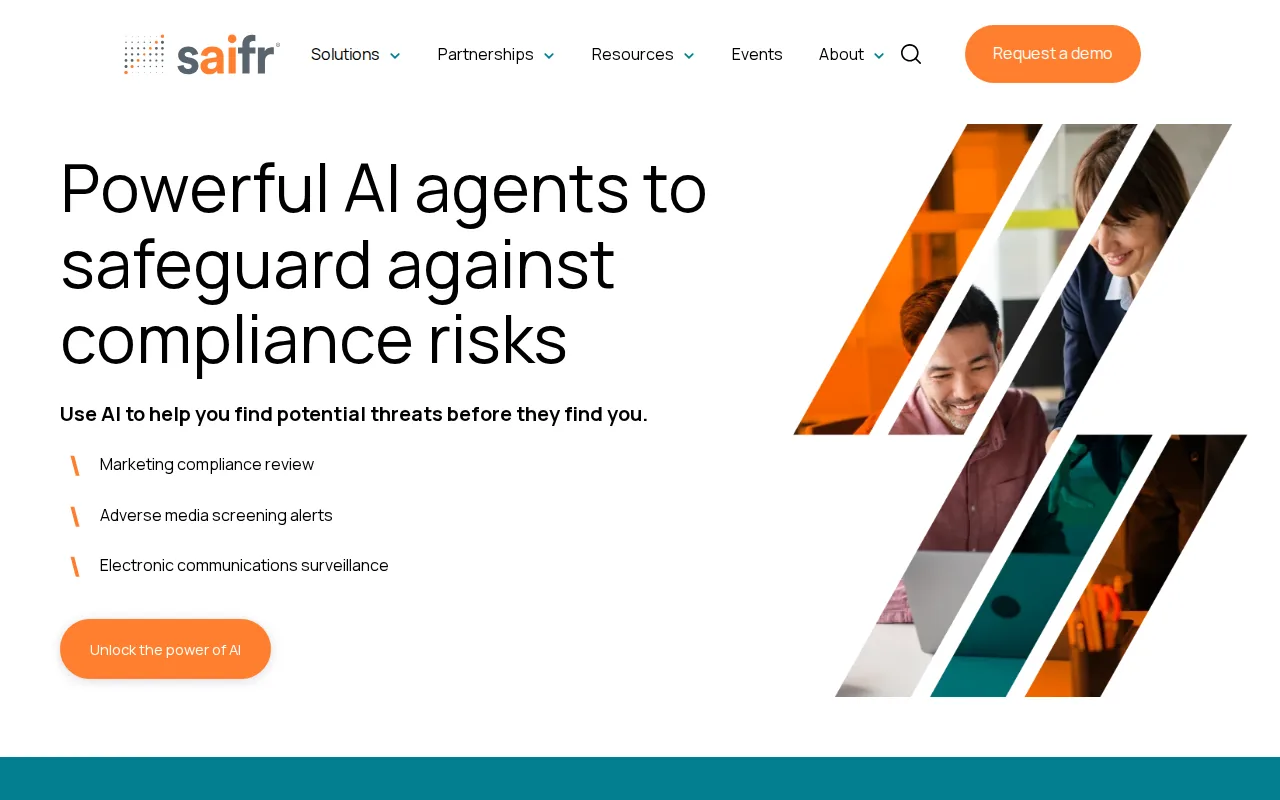
For a financial firm, assess whether a proposed solution fits the content your team produces. Have compliance staff test sample material and confirm how items needing review move to approval.
Compare the options: frameworks, integrations, safeguards, and cost
These tools don’t all solve the same problem. Some help run a compliance program; others focus on AI governance, model oversight, or a specific regulated workflow. Compare the job first, then test how the platform works with your systems and review process.
| Option | Primary fit | What to test | Pricing |
|---|---|---|---|
| Scytale | Evidence and policy workflows | Framework coverage and tier fit | See website |
| Hyperproof | Multi-framework evidence links | Availability and AWS or Okta fit | See website |
| ComplyJet | Startup policy drafts | Human review and workflow maturity | See website |
| Corporater | Centralized enterprise compliance | Required modules and AI capabilities | See website |
| Checkr | AI-supported background checks | Screening workflow and human review | See website |
| CustomGPT.ai | Knowledge-grounded agents | Source quality and access controls | See website |
| Trustible | Enterprise AI governance | Intake and usage oversight process | See website |
| Holistic AI Platform | End-to-end AI governance | One AI use case from intake through oversight | See website |
| Monitaur | AI model governance assessment | Model records and review roles | See website |
| Saifr | Regulated content review | Relevant rules and approval steps | See website |
Pricing and integrations affect total effort as much as the feature list. Ask for the full quote, setup scope, and the systems that can connect to the platform. Also test how the tool handles unsupported evidence or a flagged result. A human should own important compliance decisions.
Healthcare organizations need to assess how AI tools touch protected health information and how safeguards fit their environment. Advatek can help assess the IT setup around a selected tool, including 24/7 monitoring, patch management, and compliance training. For healthcare-focused AI use cases, see our overview of HIPAA-compliant AI tools.
Pro Tip: Before a demo, choose one real workflow, such as collecting audit evidence or reviewing a policy question. Ask the vendor to show each handoff, including where a person checks the result.
Frequently asked questions
What does AI compliance software do?
AI compliance software uses AI to support work such as drafting policies, collecting evidence, mapping controls, or answering questions from approved material. The exact job depends on the tool. Some platforms help manage an existing compliance program, while others focus on oversight of AI systems or a narrower workflow such as background checks.
Is AI compliance software the same as AI governance software?
No. Compliance software may help an organization manage evidence and obligations for a framework. AI governance software focuses on how the organization assesses and oversees its AI systems. Some products may touch both areas, but buyers should define which workflow they need before comparing features.
Can AI compliance software make a company compliant?
No. Software can help organize tasks and records, but the organization remains responsible for its policies, controls, risk decisions, and review. A generated policy or mapped control still needs to match the company’s actual processes. In regulated settings, involve the right compliance and IT staff before using AI with sensitive data.
How should healthcare teams evaluate AI compliance tools?
Healthcare teams should map what information the tool can access and how that access is controlled. Check the vendor’s current security terms and test the workflow with appropriate safeguards. Then review how staff approve AI output and how records are kept. A qualified IT provider can help assess integrations and operational risks before rollout.
Conclusion
Choose the tool that fits the work you need to manage, then test it against a real workflow before committing. For healthcare and other regulated organizations, Advatek can review the surrounding IT, cybersecurity, and compliance needs. Start by asking our team to assess your current systems and identify a safe path for implementation.
Download Franchise Information Report
Want to learn more about opening your own franchise? Fill out this form to get started: