
Best Predictive Maintenance Software for 2026
Factories that wait for a machine to break waste time and money. Predictive maintenance software lets you see trouble before it hits the line. Below is a short list of the leading platforms and who they work best for.
We analyzed 22 YouTube comments about predictive maintenance software and found that 36% mentioned algorithm and sensor integration details.
1. IBM Maximo Application Suite: Enterprise asset management with AI health scoring
IBM Maximo Application Suite combines enterprise asset management with asset performance management. It adds AI health scoring, anomaly detection, and failure probability estimates, so you get a clear risk picture for each piece of equipment.
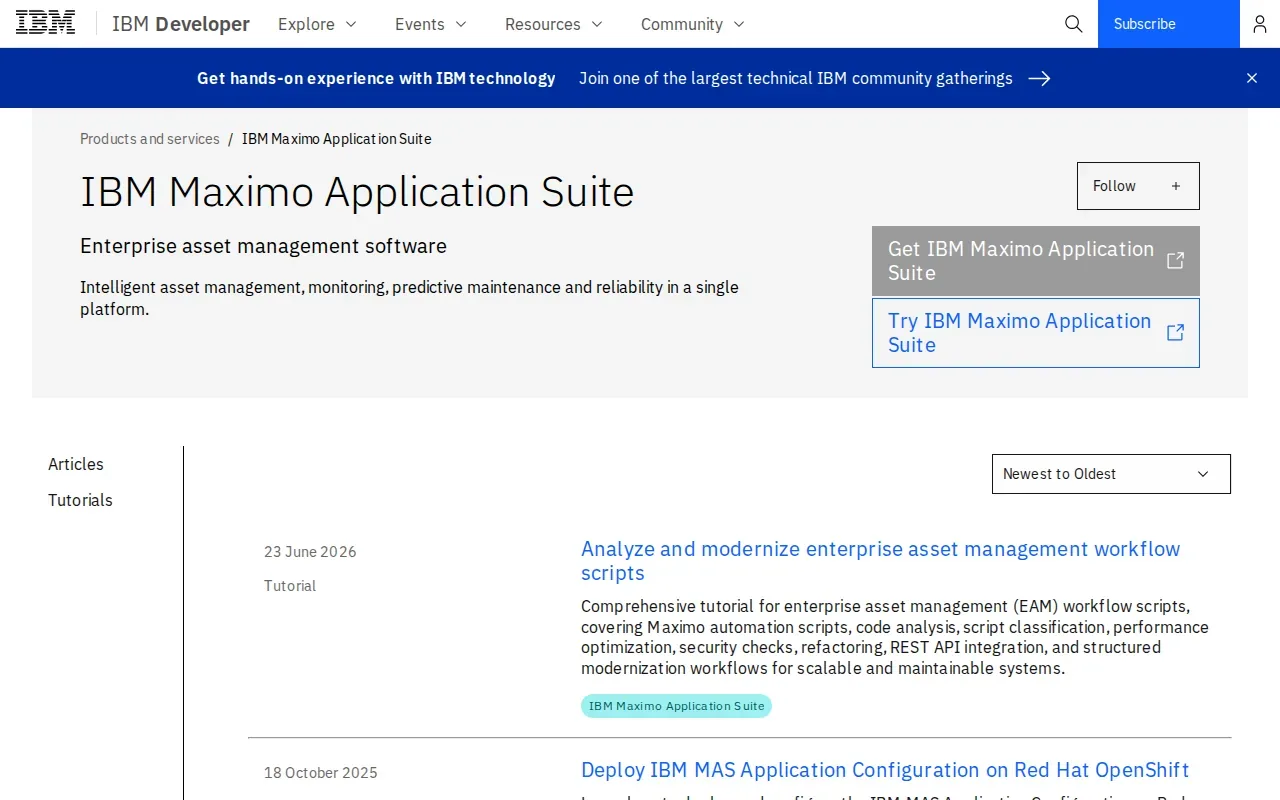
The suite runs on‑premise, in the cloud (AWS, Azure, Google Cloud), or as SaaS, giving you flexibility to match your security policy. It plugs into most CMMS/EAM tools, but the initial setup is a major project that usually needs certified consultants.
Because the platform can handle thousands of assets, large manufacturers often use it to drive plant‑wide reliability programs. The AI engine learns from sensor streams and flags emerging risks before they become failures.
Bottom line: Maximo is a heavyweight that pays off when you have the staff and budget to manage a complex rollout.
2. Machine Health by Augury: Sensor monitoring paired with reliability expertise
Machine Health by Augury combines wireless sensors, AI diagnostics, and reliability experts in a subscription. Its AI-powered monitoring is built to flag developing failures early.
Augury fits teams that want sensor monitoring and expert review bundled in one subscription, rather than staffing their own reliability analysts.
3. Tractian: Condition‑monitoring hardware and software in one platform
Tractian delivers both the sensors (vibration, temperature, RPM, runtime) and the cloud‑based software that turns raw data into AI‑powered diagnoses. The tight hardware‑software combo means you don’t have to hunt for third‑party sensor kits.
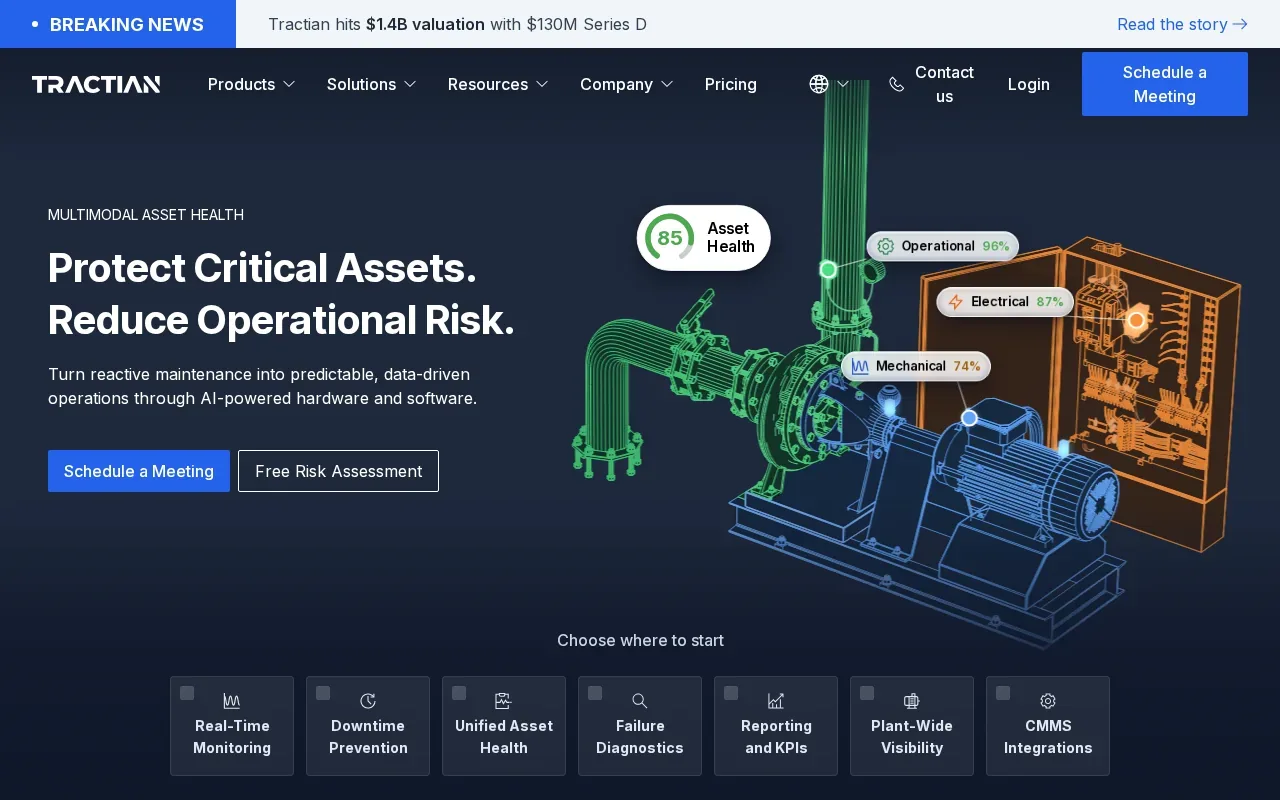
Setup is meant to be simple: you mount a sensor and the dashboard starts showing health scores. The AI model is pre‑trained on common failure modes, so you get useful alerts even if you’re new to predictive maintenance.
Because Tractian stores data in the cloud, you can scale from a single pilot line to a multi‑plant rollout without adding on‑prem servers. The platform also offers a simple API for CMMS integration.
Key Takeaway: Tractian is a solid starter for teams that want a single vendor for both hardware and analytics.
4. Fracttal One: Cloud CMMS with IoT and business‑system connections
Fracttal One is a cloud‑first CMMS that adds IoT sensor integration, AI‑driven alerts, and real‑time visibility across the whole plant. The system automates work‑order creation the moment a sensor crosses a threshold.
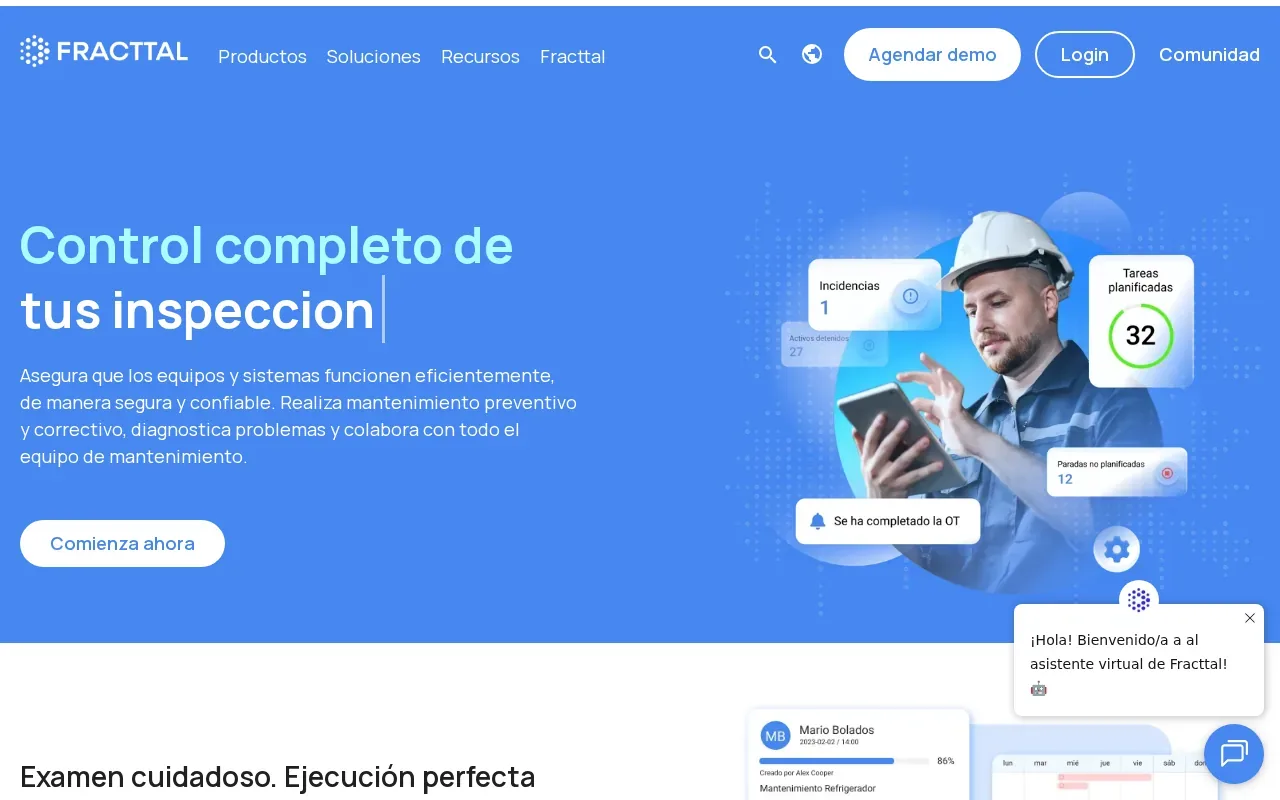
Its AI assistant suggests actions but never replaces the human decision‑maker. You can connect the platform to ERP, purchasing, and quality‑control systems, making it a true hub for maintenance, production, and finance data.
Fracttal One can suit mid‑size plants that need a unified view without a heavy on‑prem investment.
5. Fabrico: AI anomaly detection with a maintenance‑workflow focus
Fabrico treats predictive maintenance as a workflow problem, not just a data problem. It blends native OEE tracking, computer‑vision cameras, and AI anomaly detection into one platform.
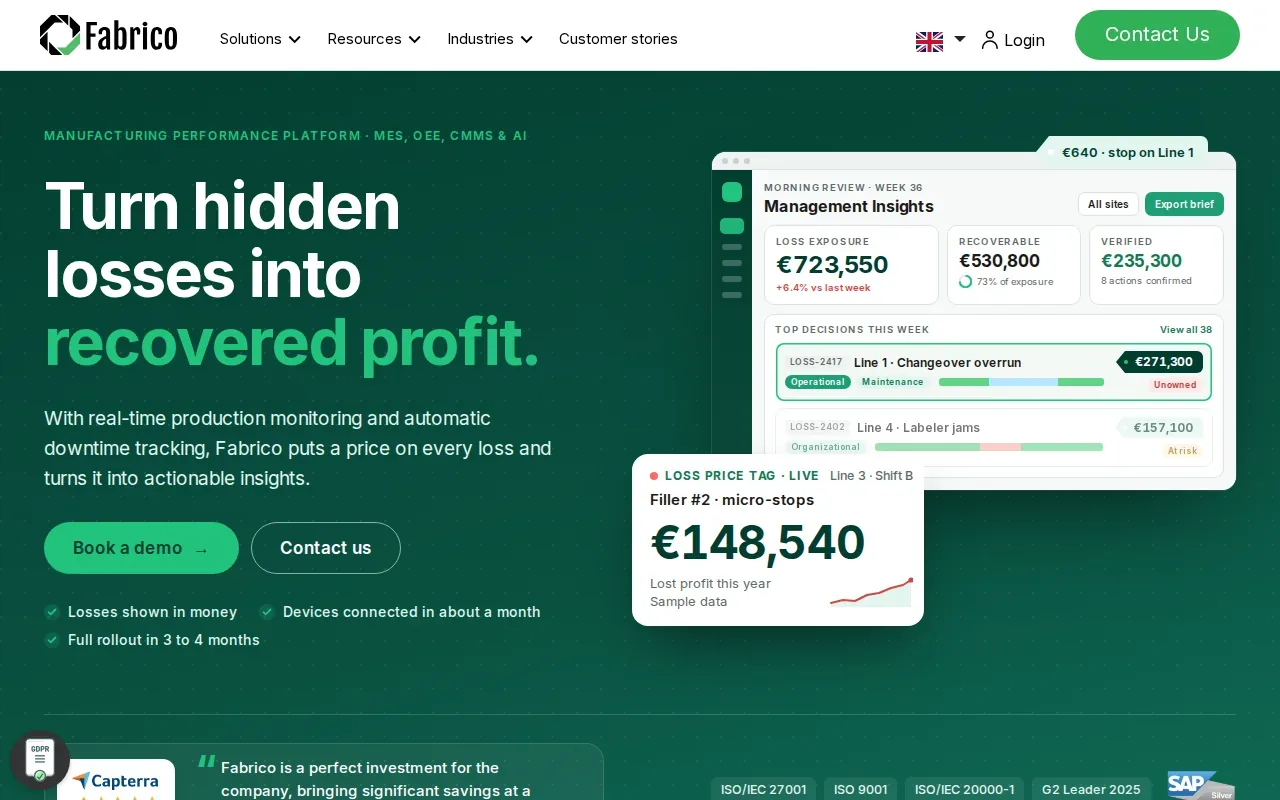
The AI watches production speed, quality, and equipment health. When a micro‑stop occurs, the system captures a short video clip, letting technicians see the exact cause before they even walk to the machine.
Fabrico then auto‑generates a condition‑based work order that includes a QR code, spare‑part list, and standard operating procedure. The technician scans the code, follows the guided steps, and closes the ticket, all from a mobile app.
Because the platform ties performance loss directly to maintenance actions, you avoid the latency that plagues siloed sensor‑only solutions.
Pro Tip: Pair Fabrico’s OEE feed with your existing ERP so the system can auto‑adjust production schedules when a maintenance event is planned.
6. Aspen Mtell by AspenTech: Machine learning built on asset‑specific templates
Mtell starts with asset‑health monitoring templates that map to specific industry equipment, then layers machine‑learning models that predict failures up to 90 days out. The built‑in FMEA library helps you rank risk and plan mitigations.
Integration options include major EAM and ERP systems, so alerts flow straight into the work‑order queue. The platform’s biggest hurdle is the implementation effort, data scientists often need to fine‑tune models for each plant.
As with any model-based alerting, plan how your team will review alerts and handle false positives before going live.
| Feature | Details |
|---|---|
| AI scope | Machine‑learning failure prediction, pattern detection up to 90 days |
| Templates | Industry‑specific asset templates with built‑in FMEA |
| Integrations | EAM, ERP via standard APIs |
| Limitation | Significant implementation effort |
How to Choose the Right Predictive Maintenance Solution
First, map your asset criticality. If you run a handful of high‑value machines, a sensor‑only tool like Tractian may be enough. For plants with mixed‑criticality fleets, a full CMMS‑plus‑AI stack such as Fracttal One or IBM Maximo gives you the data plumbing you need.
Second, check integration pathways. Does the vendor speak the language of your existing ERP or EAM? A smooth API saves months of custom coding.
Third, weigh implementation effort against ROI. Heavy‑weight platforms promise deep insights but demand skilled data scientists. Lighter solutions can deliver quick wins while you build a data foundation.
Finally, consider support. Vendors that bundle expert services, like Augury’s reliability team, reduce the risk of a stalled rollout.
Before adopting predictive maintenance software, identify priority equipment, decide who will review alerts, and agree on how follow-up work will be handled. A qualified IT service provider can help assess requirements and manage AI implementation within existing IT infrastructure. Without professional guidance, teams may overlook integration needs or struggle to decide how to respond to alerts. For healthcare, nursing homes, home healthcare, financial institutions, and law firms, implementation should also account for compliance and cybersecurity needs.
Our own Advatek team can help you weigh these factors and manage the implementation as your needs change.
Frequently Asked Questions
What is predictive maintenance software?
Predictive maintenance software uses sensor data and AI models to forecast equipment failures before they happen, allowing you to schedule repairs during planned downtime.
Do I need IoT sensors for every machine?
You don’t have to sensor every asset; focus on the most critical or failure‑prone equipment first. Most platforms let you add sensors gradually as the ROI becomes clear.
Can predictive maintenance help with compliance?
It can. Documented condition‑based interventions give you maintenance records that support audits. Check which records your regulators, accreditors, or standards bodies expect, and keep any patient or client data out of maintenance systems unless they are approved for it.
How long does it take to see results?
It depends on the equipment, the data you already collect, and how quickly sensors and integrations are in place. Clean data streams and a basic integration shorten the path to useful alerts.
Is cloud deployment safe for sensitive data?
Most cloud‑based solutions use enterprise‑grade encryption and role‑based access controls. If you have strict data‑sovereignty rules, choose a provider that offers private‑cloud or on‑premise options.
Should I manage the rollout myself?
While you can run a pilot internally, partnering with an experienced MSP reduces risk, ensures proper change‑management, and keeps the project on schedule.
Conclusion
If you need a platform that scales across many assets and integrates with major ERP systems, IBM Maximo Application Suite is a safe choice. Reach out to Advatek to talk through how the rollout would fit your existing systems.
Download Franchise Information Report
Want to learn more about opening your own franchise? Fill out this form to get started: