
Predictive Maintenance AI: How It Works and Where It Fits
A motor can show signs of trouble long before it stops. Predictive maintenance AI looks for those signs in equipment data, then helps teams decide when to act.
We’ll explain how the process works, where it fits, and what can go wrong when teams treat an AI alert as a maintenance plan.
What Predictive Maintenance AI Is: How It Anticipates Failures
Predictive maintenance AI uses equipment data to estimate when a machine may need service. It aims to replace a fixed service schedule with decisions based on a machine’s current condition.
That’s different from reactive maintenance, where a crew fixes a machine after it fails. It also differs from preventive maintenance, where a team services equipment at set intervals, even if a part still has useful life. Predictive maintenance uses signals such as vibration or heat to flag a change that may point to wear.
In a typical setup, sensors send readings to a local computer or a cloud system. The model compares current data with past readings or a learned picture of normal operation. If it finds a change, it can flag an anomaly, classify a likely fault, or estimate remaining useful life. Those are related tasks, but they answer different questions.
AI can help when equipment behavior shifts in ways a simple threshold can’t capture. A fixed rule might flag a motor only after its temperature passes a set limit. A model may also consider how temperature changes alongside vibration, load, or operating time. That can give a maintenance team earlier context, though the result still needs review.
IBM’s overview of AI in predictive maintenance describes the shift from set schedules to real-time equipment data and analysis. The value depends on whether the signal is useful, the model is tested, and someone can act on the warning.
Traditional predictive maintenance may use condition readings and known thresholds. AI-based systems can learn patterns across several data points, but the label “AI” alone doesn’t tell you which model is used or how well it works. Vendors don’t always share those details. Ask what data the system uses and what kind of output it produces.
Before a pilot, we’d also check whether the alert can reach the maintenance team’s existing work process. A prediction that lands in a dashboard nobody checks won’t change the timing of a repair.
From IoT Sensor Data to an Early Warning: A Vibration Example
Here’s how predictive maintenance AI can turn vibration readings into an early warning. Imagine a motor with two vibration sensors, one on each side of its housing.
During normal operation, the sensors send readings at the same time. A team records paired values under known operating conditions. The model learns the range of readings that tends to occur when the motor is running normally.
For a simple example, imagine one paired reading is 2 and 3, then another is 3 and 5. Those values aren’t a universal safe range. They just show how two sensors can form a pattern. If a later pair is 8 and 2, the model may flag it as unusual because it falls outside the pattern it learned.
An unusual reading isn’t proof that the motor will fail. A loose sensor or a change in machine speed could also cause a shift. The alert tells the team to check the equipment and context. A technician can compare the reading with inspection notes, load changes, or recent work before deciding what to do.
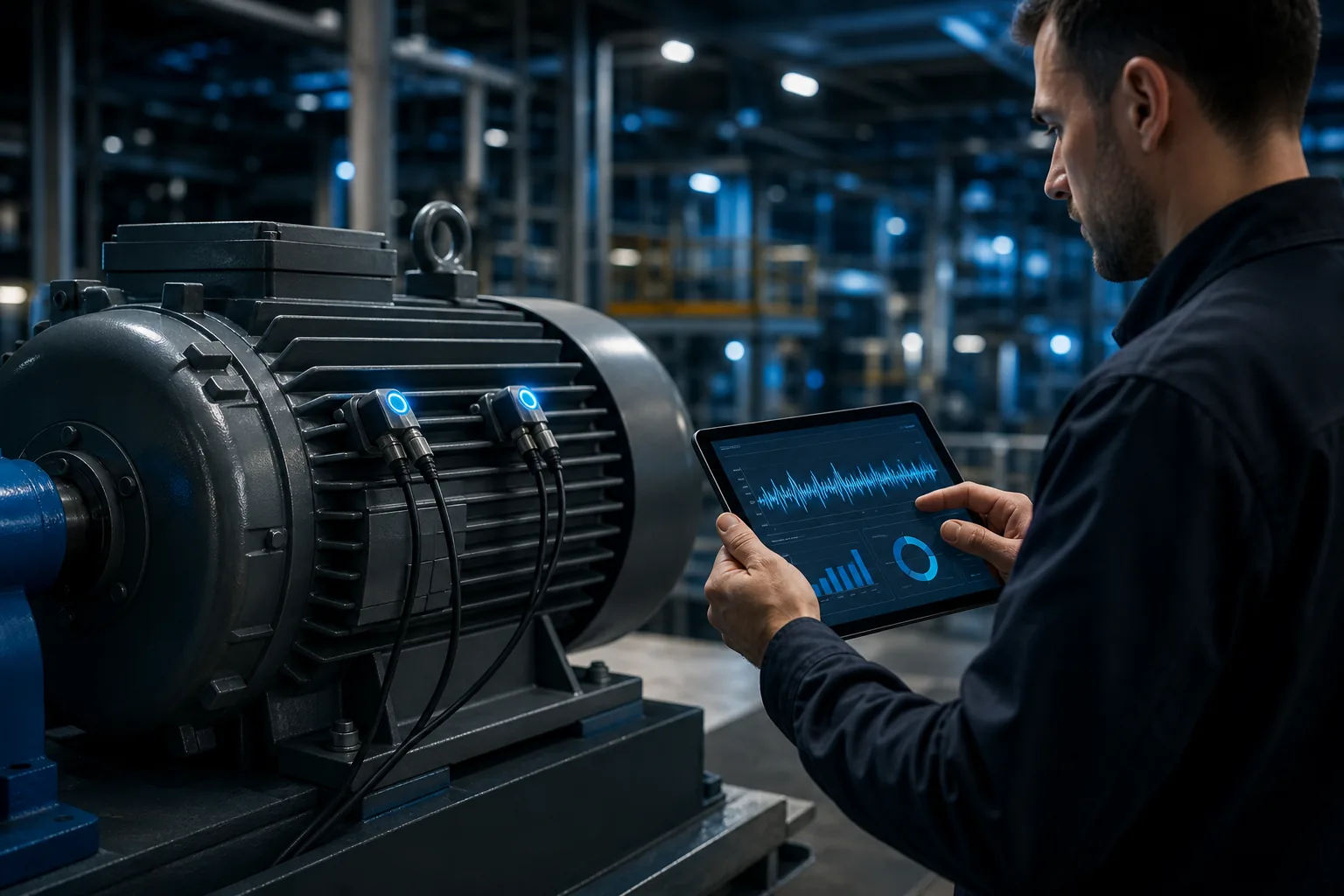
Real sensor streams need more care than this small example suggests. The team has to align readings by time, remove bad or missing data, and account for changes in load or speed. Otherwise, normal operating changes may look like faults. Teams may also process data near the machine when a fast response or limited network connection makes sending every reading to a central system a poor fit.
We’d keep a record of the alert and the technician’s finding. Over time, those outcomes help show whether the model is flagging useful changes or creating too many false alarms. The goal is a warning that fits the asset, not a stream of alerts that staff learn to ignore.
For an organization connecting AI with older systems, planning AI integration with existing IT infrastructure can help clarify data paths, system access, and security controls before a pilot expands.
A Four-Part Path from Model Development to Production
A predictive maintenance AI project needs more than a trained model. We’d treat it as four connected parts: build useful inputs, train a model, test its output, then connect it to the work process.
1. Build and check the input data
Start with one asset or asset group and define the failure the team wants to detect. Gather the readings that may signal it. Depending on the machine, that may include vibration, temperature, pressure, power use, images, or maintenance records.
Check timestamps, sensor gaps, units, and asset IDs. A reading linked to the wrong machine can spoil the result. Failure examples can be hard to collect because teams work to prevent breakdowns. Where suitable engineering models exist, teams may use simulated data to explore fault patterns. But simulated data doesn’t replace a check against real equipment.
2. Extract features and train a model
Raw readings are often too detailed to use as-is. Feature extraction turns them into useful measures, such as changes in vibration over a time window. Engineers know which shifts may matter for a specific motor or pump. Data specialists can then test methods for anomaly detection, fault classification, or remaining-life estimates.
MathWorks’ predictive maintenance material describes using engineering features, synthetic sensor data, and deployment to devices or IT and OT systems. It’s a reminder that model design depends on machine knowledge as much as on an algorithm.
3. Validate the warning
Test the model on data it didn’t use during training. Check whether it spots known faults and how often it raises a false alarm. Review performance across different loads or operating conditions, not only on a single clean test set.
Set a clear rule for what happens when a warning appears. A low-confidence anomaly might trigger an inspection. A high-risk alert may need a faster human review. The maintenance lead should agree on these actions before the system goes live.
4. Connect the model to production work
Route alerts to a tool or person the team already uses. Decide who checks the alert, who can approve a work order, and how the team records the repair result. Start with a limited pilot, review the alert quality, and expand only when the workflow holds up.
A model can run in the cloud or closer to the equipment. The right place depends on response time, network access, and the site’s security needs. Production integration is often the hard part. We can help assess the IT side, but an industrial engineer and maintenance lead should guide decisions about the machine and its safe operation.
Where It Fits: Manufacturing, Utilities, HVAC, and Legacy Equipment
Predictive maintenance AI fits best when a failure has a clear operational cost and the equipment produces data that can reveal a change in condition. The use case varies by asset.
Manufacturing and heavy equipment
On a production line, a motor or pump can affect the next stage of work. A vibration or temperature warning gives the maintenance crew a chance to inspect the machine during a planned pause. Teams can also use maintenance history to see whether similar alerts led to a repair or turned out to be harmless.
Asset-heavy operations may need to monitor many machines across sites. Smaller facilities may begin with a single critical asset. A system designed for a large fleet may ask more of a small team than it can support, so match the rollout to the staff and workflow available.
Utilities and infrastructure
Utilities often rely on equipment that runs for long periods and can be difficult to take offline. Sensor trends can help staff prioritize inspection and plan service windows. A model can inform a decision, but it shouldn’t replace required checks or an operator’s judgment about a safety issue.
HVAC, refrigeration, and MEP
For HVAC or refrigeration, useful signals may include temperature, pressure, vibration, or energy use. A building team might watch a rooftop unit for a change that persists across normal operating cycles. In a hospital, data center, or manufacturing facility, the effect of a system fault can extend beyond repair costs, so escalation rules matter.
Predictive maintenance can combine sensor data with operational information to estimate equipment condition. In a building, readings make more sense when tied to equipment use and maintenance history.
Older equipment
Legacy equipment may lack built-in sensors or modern data links. Teams can assess whether external sensors can capture a useful signal, then decide how to move that data without disrupting the control system. Older control systems can have limited interfaces, so an integration should be reviewed for access, network boundaries, and the effect on normal operations.
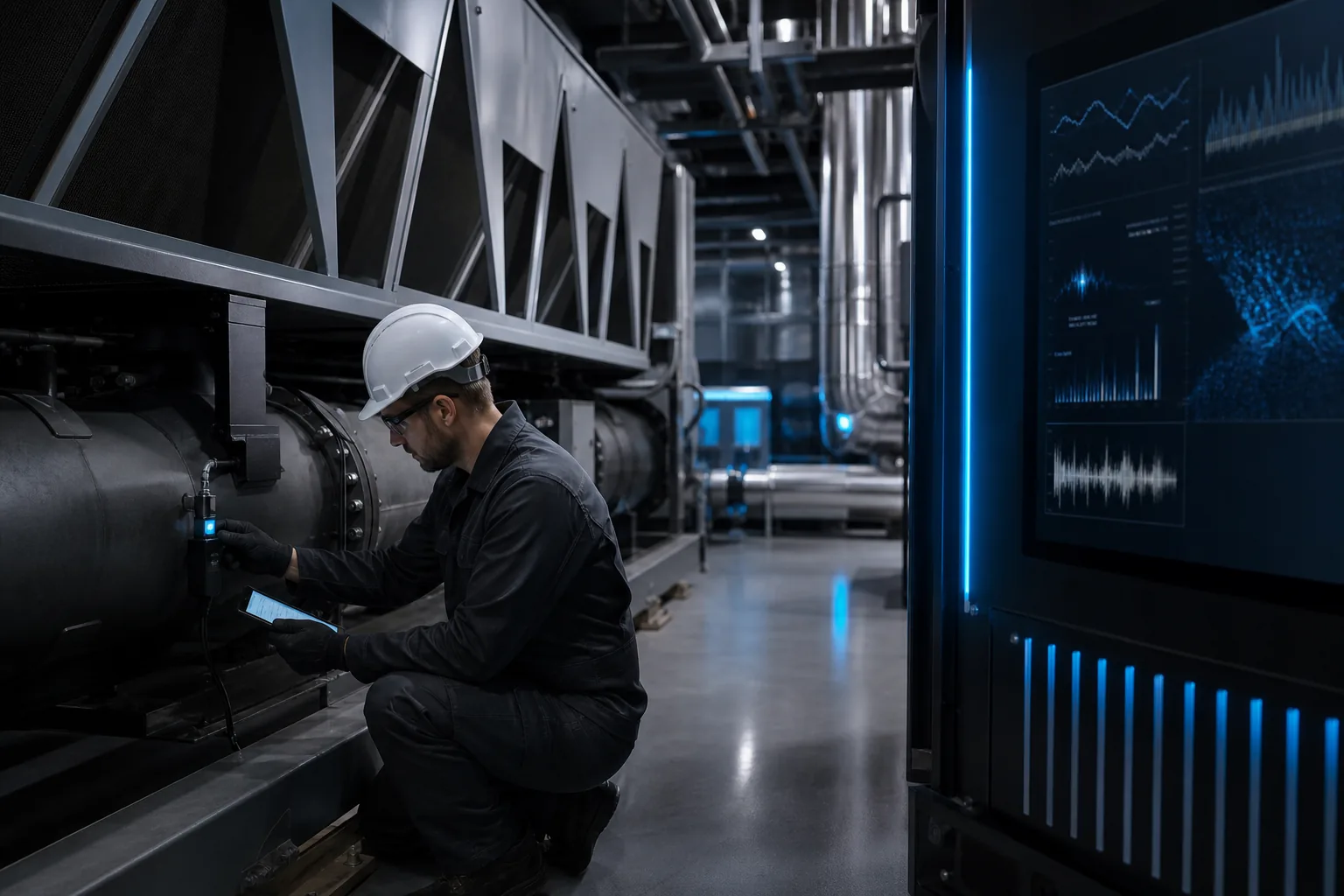
Building maintenance can also involve contractors who handle design, construction, and ongoing service. For example, a building service provider’s architecture, construction, and maintenance work shows how building upkeep sits within a wider facilities process. Predictive monitoring only helps when someone owns the next inspection or repair.
For older assets, a pilot should answer a narrow question: can the sensor measure a condition that changes before a fault, and can staff respond to it? If the answer is unclear, adding more sensors won’t solve the problem by itself.
The Benefits—and the Limits—of Predicting Equipment Problems
When the signal is useful and the response is clear, predictive maintenance AI can help a team plan repairs instead of reacting to a breakdown. That can reduce unplanned downtime and help protect production schedules.
It may also cut needless service work. A preventive schedule can replace a part that still has useful life, while a condition-based plan can focus attention on equipment showing signs of change. Better timing can help teams plan for parts and labor, though a model can’t make scarce parts appear or guarantee that a repair will prevent a failure.
Reliability improves only when the full process works. Staff need to see alerts, check them, and record what they found. If a warning comes too late, arrives without enough context, or gets lost in another dashboard, the predicted risk may not change the outcome.
Data is a key limit. Failure cases may be rare, sensor readings may be noisy, and machines may behave differently after a process change. A model trained on one operating condition can become less useful when the equipment or workload changes. Teams need a way to review performance and update the system when those conditions shift.
There’s also a transparency gap. Product descriptions may not say which model is used, what systems it connects to, or what maintenance actions it can automate. Ask a vendor to explain the inputs, alert logic, integration options, data handling, and human approval points. Test those claims with your own equipment before relying on them.
We’d track operational measures that fit the pilot, such as alert accuracy, time from alert to review, and whether planned repairs replaced emergency work. Don’t treat a single avoided breakdown as proof of long-term savings. A fair evaluation compares the same type of asset over enough time to account for normal variation.
Key Takeaway: A prediction is useful only when staff can verify it and take the right maintenance action.
Turning Predictions into Work: Agentic AI, Security, and Expert Support
A failure warning is only the first decision. Teams may still need to find the right manual, check past work orders, confirm parts, and choose a repair window that doesn’t disrupt production.
Agentic AI may help gather that context. An AI agent could search approved manuals or maintenance notes, then draft an incident summary for a person to review. It may also help match a sensor alert to an asset record. That’s different from letting an AI system approve repairs or change machine settings on its own.
Keep a human in charge of actions that can affect people, equipment, or production. The agent should use approved sources and show where its answer came from. A wrong manual or mismatched asset ID can lead to a poor recommendation. Staff need a clear way to correct the record.
Security needs attention too. Connecting sensors or AI agents to operational technology can create new data paths between shop-floor systems and business networks. Limit access to what each system needs. Log important actions, protect data in transit, and review how a vendor stores or uses equipment data.
That review matters for regulated organizations as well. Healthcare teams may have sensitive information in connected business systems, even when the equipment model focuses on facilities or operations. We’d map what data moves through the system and who can see it before expanding a pilot. Advatek can support AI planning alongside managed IT, cybersecurity, and compliance needs, while industrial controls decisions stay with the qualified operations team.
Vendor claims need checking. Product pages may not spell out the model type, automation, integrations, or limits in enough detail for a safe decision. Ask for a demonstration using a relevant workflow. Then confirm how alerts reach staff, what the system does automatically, and where a person must approve the next step.
For organizations that need help with ongoing system visibility, 24/7 network monitoring services can address the IT environment around connected systems. Monitoring doesn’t replace equipment maintenance, but it can help teams notice network or device issues that affect data flow.
Advatek can help business leaders assess AI integration, security controls, and the support model needed to keep a solution in use. The right partner won’t promise that a model prevents every failure. They’ll help define what it can detect, how staff should respond, and how to review results.
Frequently Asked Questions
What is predictive maintenance AI?
Predictive maintenance AI uses equipment data and machine learning to flag signs of a possible fault. It may detect unusual behavior, classify a fault, or estimate how much useful life remains. The system supports a maintenance decision; it doesn’t prove that a machine will fail or replace a technician’s inspection.
What data does predictive maintenance AI use?
Predictive maintenance AI often uses sensor readings such as vibration, temperature, pressure, or power use. It may also use images, operating conditions, and maintenance records. The right inputs depend on the asset and the fault being tracked. Teams should check that readings have accurate timestamps and are tied to the correct machine.
How is AI predictive maintenance different from preventive maintenance?
Preventive maintenance follows a schedule, such as servicing a part after a set period. AI predictive maintenance uses current equipment data to flag when service may be needed. It can help teams avoid some early replacements, but the model needs good data and human review. It doesn’t remove safety checks or required maintenance tasks.
Can predictive maintenance work with older equipment?
Yes, predictive maintenance can work with some older equipment if suitable sensors can capture a useful condition signal. Teams may need to add sensors or build a safe path for data to reach an analysis system. They should check compatibility and network access first, then test one asset before expanding the setup.
Does predictive maintenance AI prevent equipment failures?
No, predictive maintenance AI can’t guarantee that equipment won’t fail. It can identify patterns that may point to a problem and give a team time to inspect or plan a repair. Sensor faults, sudden damage, or a change in operating conditions can still lead to missed or inaccurate alerts.
Why involve an IT service provider in predictive maintenance?
An IT service provider can help review data flows, system access, cybersecurity, and the links between AI tools and business systems. Industrial engineers and maintenance leads still need to guide machine-level decisions. Advatek can help assess the IT and security side so teams can plan a controlled pilot and a clear support process.
Conclusion
Start with one asset and one fault you can recognize, then test whether the data supports a useful warning. We recommend involving maintenance, engineering, and IT before connecting a model to production. Advatek can help review the AI, security, and support needs; your next step is to map the asset’s data and the person who will act on each alert.
Download Franchise Information Report
Want to learn more about opening your own franchise? Fill out this form to get started: