
AI Governance Framework: Core Elements & Use Cases
AI is changing how we work, but without clear rules it can bite back. Below we break down the core of an AI governance framework, show how U.S. rules shape it, and give practical steps you can act on today.
We analyzed 31 YouTube comments about AI governance frameworks and found that 26% mentioned insufficient AI safety safeguards.
What an AI Governance Framework Is, and What It Covers
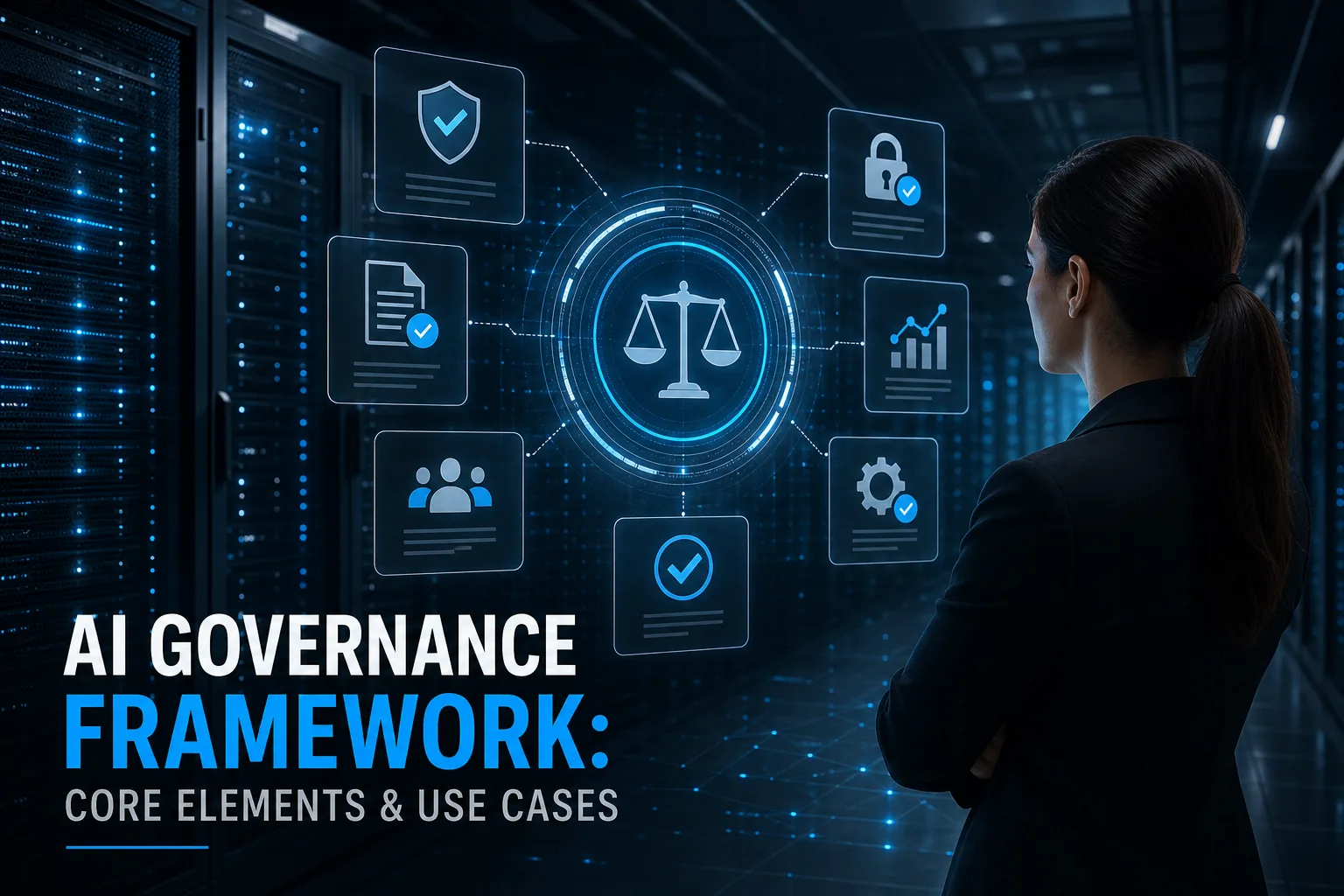
An AI governance framework is a set of policies, roles, and controls that keep AI systems honest, safe, and compliant. It tells you who can build a model, what data it may use, how to test for bias, and what logs to keep for audits. The idea is to turn lofty ethical talk into day‑to‑day checklists.
Key coverage areas include model purpose, data provenance, risk assessment, monitoring, and incident response. For regulated sectors like healthcare, the framework must also map to HIPAA and other privacy rules. In practice, you end up with a living document that lives alongside your code and your security policies.
Advatek helps firms stitch these pieces together with 24/7 monitoring, compliance training, and AI‑driven risk reviews. That way, a small clinic can meet both AI ethics and HIPAA without hiring a full‑time governance team.
The Building Blocks: Roles, Policies, and Risk Controls
First, assign clear ownership. A chief AI officer or an existing CISO can act as the governance lead, overseeing model approvals and audit trails. Second, write policies that spell out data handling, model validation, and human‑in‑the‑loop requirements.
Risk controls sit on top of those policies. You need automated testing for data drift, bias checks that run on each model update, and alerts when outputs fall outside trusted ranges. Logging every inference that touches sensitive data satisfies both security and compliance audits.
Advatek’s managed services can set up these controls and keep them tuned, so you don’t have to reinvent the wheel each time a new AI tool rolls out.
The NIST AI Risk Management Framework provides a detailed checklist for each of these blocks, from governance structure to technical safeguards.
How U.S. Rules and Voluntary Guidance Fit In
There is no single federal AI law for private businesses. The NIST AI Risk Management Framework is voluntary guidance that many organizations use as their starting point, and federal AI policy has shifted between administrations. States are adding their own rules: Colorado’s AI Act targets high-risk AI used in important decisions about people, and California’s SB 53, signed in 2025, requires large frontier AI developers to publish safety frameworks.
Most of these rules aim at large AI developers or high-risk uses. Still, they shape what public-sector partners, insurers, and auditors expect, especially when you handle regulated data like patient records.
Advatek’s compliance experts keep track of each new rule and map it to your existing governance documents, so you stay ahead of the curve without chasing every press release.
Applying AI Governance in Healthcare and Other Regulated Work
Healthcare providers face a double‑whammy: they must protect patient health information and prove that AI decisions are explainable. A governance framework links model outputs to the clinical question, records the data source, and forces a clinician review before any automated recommendation reaches a patient.
Financial firms, law firms, and nursing homes share similar pressures. They all need audit‑ready logs, clear data‑ownership rules, and documented risk mitigations. When a regulator asks for evidence, a well‑structured framework delivers it in minutes, not weeks.
Advatek’s AI consulting tailors the framework to each sector, adding HIPAA‑specific controls for clinics or SOC 2 checks for finance firms.
Check out the Best HIPAA Compliant AI Tools for Healthcare to see how vendors align with these requirements.
Putting Governance Into Practice, and When to Get IT Support
Start with a baseline assessment. Map every AI model to its data source, intended use, and risk level. Then layer policies, assign owners, and plug in automated monitoring tools.
For small and mid‑size firms, the biggest gap is often the lack of a dedicated owner. Advatek can act as that owner, handling approvals, logging, and quarterly reviews.
When you reach the point where models are touching PHI, financial records, or legal documents, it’s time to bring in a managed IT partner. They can enforce role‑based access, encrypt data at rest, and integrate logs with your SIEM.
Our threat‑detection service helps you spot rogue AI usage before it becomes a breach. Learn more about the Best AI Threat Detection Services for Business.

Pro Tip: Schedule a quarterly governance health check. A short review catches drift, updates policy gaps, and keeps auditors happy.
Frequently Asked Questions
What is the main purpose of an AI governance framework?
The main purpose is to ensure AI systems are safe, ethical, and compliant with laws. It does this by defining roles, policies, risk controls, and audit processes that guide every stage of model development and deployment.
Do I need a formal framework if I only use off‑the‑shelf AI tools?
Yes. Even ready‑made AI services can process sensitive data, so a framework helps you document usage, set access limits, and prove compliance to regulators or partners.
How does the NIST AI Risk Management Framework differ from the EU AI Act?
The NIST framework is voluntary U.S. guidance for managing AI risk. The EU AI Act is binding law in the European Union that sorts AI systems by risk level and sets legal duties, such as human oversight, for high-risk uses.
Can a small clinic implement AI governance without hiring a full‑time specialist?
Absolutely. Managed IT providers like Advatek can act as the governance owner, handling policy creation, monitoring, and quarterly reviews on behalf of the clinic.
What are the biggest pitfalls when building an AI governance program?
Common pitfalls include assigning vague ownership, relying on paper‑only policies, and failing to log AI‑driven decisions. Without concrete enforcement, a framework becomes a checklist that no one follows.
Conclusion
Start with a clear ownership model, tie policies to real controls, and let a trusted IT partner handle the heavy lifting. Reach out to Advatek today to map your AI governance roadmap and get the compliance guardrails you need.
Download Franchise Information Report
Want to learn more about opening your own franchise? Fill out this form to get started: