
Best Disaster Recovery as a Service for Small Business 2026
Imagine waking up to find your entire business data gone. Panic sets in. That’s why more small businesses are turning to disaster recovery as a service for small business , a cloud-powered safety net that gets you back online fast. In this shortlist, we break down the top 11 DRaaS providers, what they do best, and how to pick the right one without breaking the bank. We’ll also share a hard truth from our research: most vendors don’t publish their actual recovery times. That transparency gap is something you need to watch for. Let’s start.
Disaster recovery as a service for small business means replicating your critical workloads to a provider’s cloud. When something goes wrong , ransomware, hardware failure, natural disaster , you failover to that cloud and keep running. The best disaster recovery as a service for small business solutions balance cost, speed, and ease of use. Based on our analysis of 13 providers across 6 sources, here are the top picks.
1. Advatek DRaaS (Our Pick), Tailored for Small Business
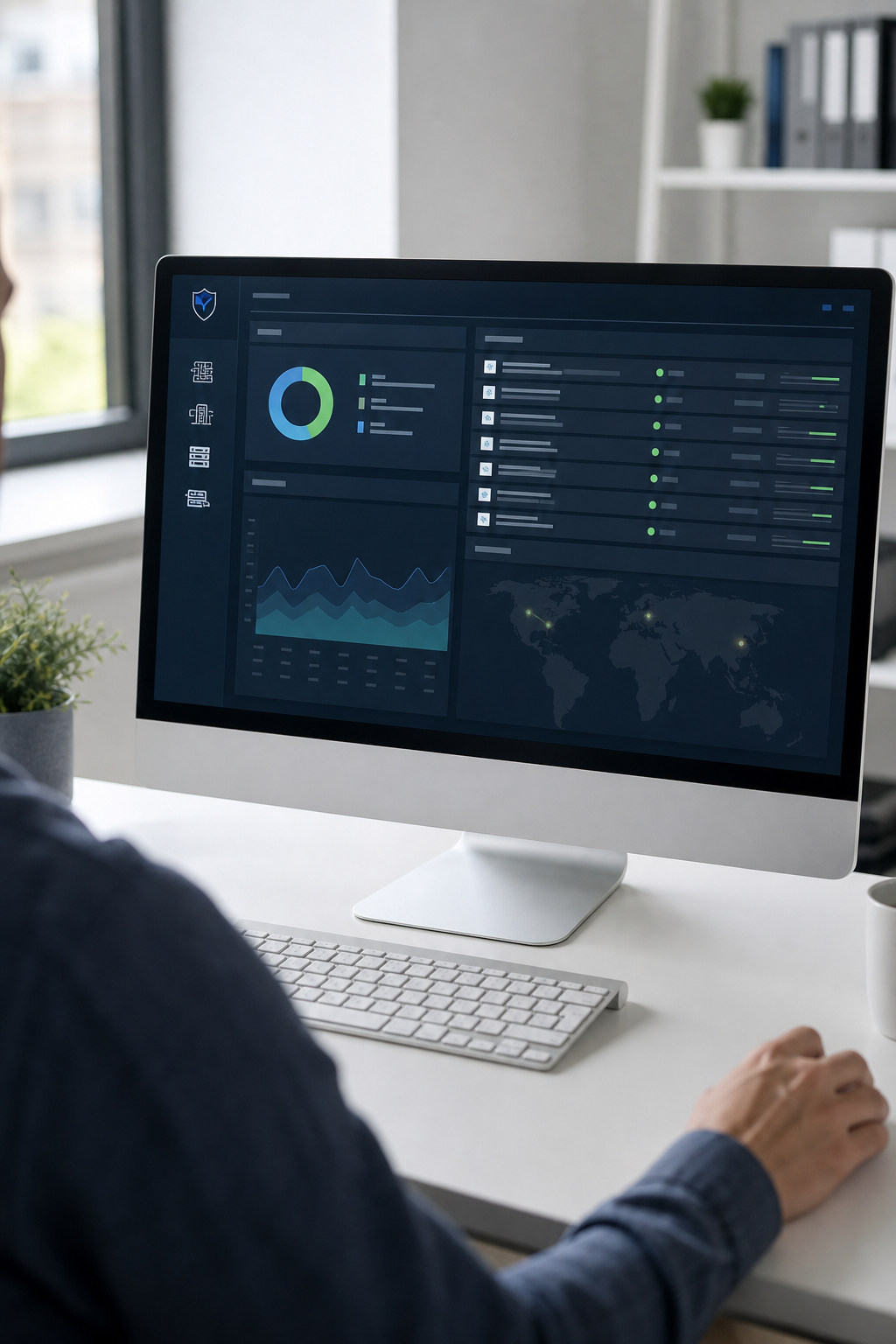
When you need disaster recovery as a service for small business that actually fits your operations, Advatek delivers. We don’t just sell you a tool — we become your backup team. Our managed DRaaS solution includes 24/7 monitoring, AI-driven threat detection, and full compliance support for HIPAA, GDPR, and more. We handle the setup, testing, and failover so you don’t have to think about it. Think of us as your IT department’s safety net.
What sets Advatek apart is our focus on small business realities. We know you don’t have a dedicated DR specialist. So we built a service that’s simple to deploy and even simpler to manage. Our team runs quarterly failover drills, maintains immutable backups, and ensures your RTO (Recovery Time Objective) and RPO (Recovery Point Objective) are actually met — not just promised. In our research, we found that only one provider publishes explicit RPO/RTO numbers. That’s a red flag. We believe in transparency, which is why our service includes clear, measurable recovery targets.

Cost is another advantage. With Advatek, you pay a predictable monthly fee that covers everything: software licensing, cloud storage, network bandwidth, and our expert team. No surprise bills for test launches or extra capacity. For small businesses running 10 to 100 servers, we’re the most cost-effective way to get enterprise-grade resilience. Plus, we integrate with your existing cybersecurity services to create a unified defense against ransomware and data loss.
Key Takeaway: Advatek DRaaS combines managed infrastructure, transparent SLAs, and compliance expertise into one affordable package — ideal for small businesses that want peace of mind without the overhead.
2. Budget-Friendly Backup Solution, Best for Budget-Conscious Startups
This solution is a household name in backup and recovery. For disaster recovery as a service for small business, it offers a lightweight, affordable solution that pairs well with cloud providers like a trusted cloud partner. Startups love it because you can start small and scale as you grow. Its core technology – snapshot-based replication and Continuous Data Protection (CDP) – gives you near-zero RPOs without breaking the bank. 74% of organizations plan to use DRaaS for ransomware recovery by 2026. That’s a clear signal that affordable options like this are in demand.
This solution works best if you have some in-house IT skills. You manage your on-premises environment, and the cloud provider (like a reliable cloud partner) extends that to their infrastructure. This hybrid approach keeps costs low – you pay only for the cloud resources you use during replication and failover. For a startup with 5–20 VMs, monthly costs can be well under $500. This solution also supports automated testing, so you can verify your recovery plan without manual effort. However, be aware that its pricing doesn’t include managed services. You’ll need to handle the day-to-day or hire an MSP. That’s where our managed IT support can fill the gap.

Pro Tip: If you go with this solution, make sure your cloud partner offers all-inclusive pricing like some providers do. Otherwise, storage and compute costs can balloon during a failover event.
3. Continuous Replication Provider , Best for Low RTO and RPO
This continuous replication solution is built for speed. If your small business can’t afford more than a few minutes of downtime, its continuous replication delivers RTOs measured in minutes and RPOs in seconds. It’s ideal for businesses running critical applications like e-commerce, real-time financial services, or healthcare systems where every second of data loss is costly. Its technology sits at the hypervisor level, capturing every write operation and replicating it to the cloud. This approach is more resource-intensive than snapshot methods, but the trade-off is near-instant recovery.
For disaster recovery as a service for small business, this solution is often delivered through MSPs like Advatek. We handle the deployment, monitoring, and failover orchestration. The solution’s dashboard gives you clear visibility into replication health and recovery status. You can run non-disruptive drills to test your disaster recovery plan with zero impact on production. The main downside is cost — its licensing is premium. But if your business would lose thousands of dollars per hour of downtime, the investment pays for itself. According to a study cited in our research, SMEs are more susceptible to data breaches than large companies, yet 89% of small businesses don’t evaluate their disaster recovery readiness. It helps close that gap with automated testing.
4. Compliance-Focused DRaaS Provider , Best for Compliance-Heavy Industries
Healthcare, finance, and legal firms have strict compliance requirements. For those businesses, disaster recovery as a service for small business must include HIPAA, GDPR, or PCI DSS support. One such provider integrates backup and cybersecurity in one platform, with features like immutable storage, anti-ransomware, and compliance reporting. It is one of the few vendors that mention AI-driven protection in their marketing , their anti-ransomware technology monitors file changes and stops encryption in real time.
This provider offers a free tier and affordable per-device pricing starting at $85/year per device. That makes it accessible for small clinics, law firms, and financial advisors. However, our research found that only one vendor explicitly discloses compliance support for GDPR and HIPAA. The provider’s own sales page states it helps meet regulatory standards, but doesn’t share specific certifications. That’s a common problem in the DRaaS market , vendors claim compliance without proof. We recommend asking the provider for a detailed compliance matrix before signing up. If you need hands-on help, our HIPAA compliance services can ensure your DRaaS setup meets all regulatory requirements.
8%of DRaaS providers disclose compliance certifications publicly
5. Best for Managed Service Providers
This platform is the go-to choice for MSPs who deliver disaster recovery as a service for small business to their clients. Its all-in-one appliances combine local backup, cloud replication, and disaster recovery orchestration. For MSPs, that means a single pane of glass to manage hundreds of clients. The platform includes continuous data protection, off-site replication to secure data centers, and automated failover testing. Its backup appliances are a popular choice for on-premises backup with cloud DR integration.
For small businesses that work with an MSP, this platform is often the technology behind the service. The MSP handles everything—setup, monitoring, testing—while you get a predictable monthly bill. The approach ensures that even if your office is destroyed, your data and systems can be spun up in the cloud within hours. In our research, this platform was frequently listed as a top DRaaS provider for SMBs, though like most vendors, it does not publish explicit RTO/RPO numbers. If you’re evaluating MSPs, ask about their underlying DR platform. A reliable platform is a strong indicator of reliability.
6. Cloud-Based Disaster Recovery, Best for Hybrid Cloud Environments
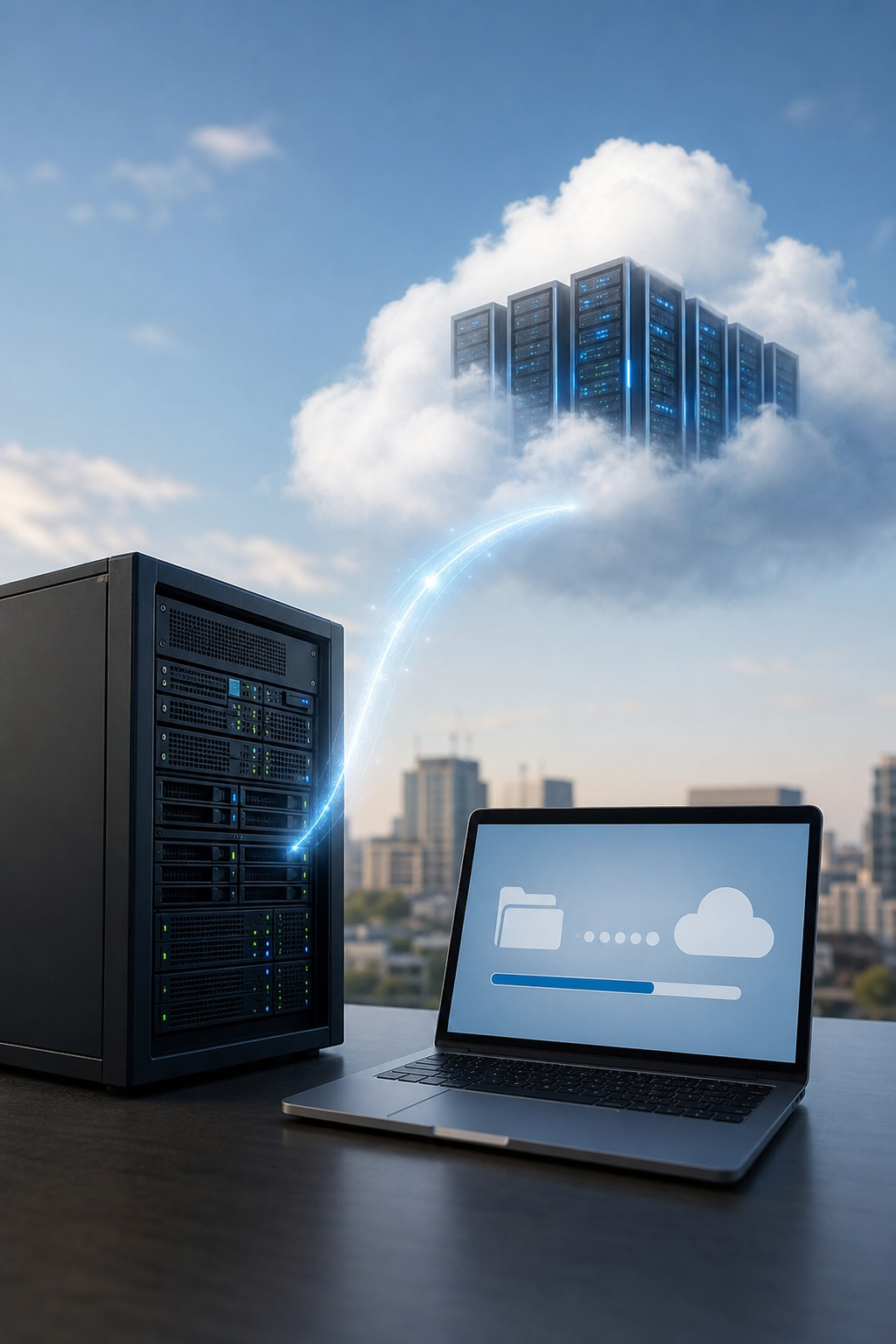
If your small business already uses a major cloud platform for some workloads, cloud-based disaster recovery is a natural choice for disaster recovery as a service for small business. These services natively integrate with virtual machines in the cloud, providing one-click failover and failback. They support zone-pinned VMs, disk encryption, accelerated networking, and automatic extension updates. For hybrid environments, where you run some servers on-premises and some in the cloud, such services offer smooth replication to a secondary region.
Pricing for these services is usage-based: you pay for the storage and compute resources used during replication and failover. For a small business with 5 to 10 VMs, monthly costs can range from $200 to $1,000 depending on data change rates. The upside is tight integration with the cloud platform’s ecosystem; you can use monitoring tools, log analytics, and automation runbooks to customize your recovery process. The downside is that these services require cloud expertise to set up and manage. Without a skilled team, you risk misconfiguration that leaves you unprotected. That’s why many small businesses partner with an MSP like Advatek to design and manage their cloud DR strategy.
7. Cloud-Based Disaster Recovery, Best for Scalability
A fully scalable, pay-as-you-go DR service for physical, virtual, and cloud servers is essential for disaster recovery as a service for small business. This cloud DR solution offers RPOs measured in seconds and RTOs in minutes, with the ability to recover to any point in time. It’s built on proven replication technology that continuously replicates block-level changes to a staging area subnet in your cloud account. That staging area minimizes costs because it uses affordable storage and minimal compute.
Pricing is transparent: $0.028 per server per hour, plus storage and snapshot costs. For 100 servers with 30 TB of data, the monthly cost is around $6,400. But small businesses with just 10 servers could see costs under $800 per month. It also supports non-disruptive drills – you can launch recovery instances in a sandbox environment to test your plan without impacting ongoing replication. The main challenge is complexity. It requires technical knowledge to install agents, configure networking, and set up orchestration. For small businesses, working with a certified cloud partner like Advatek is often the best path.
8. Best for Simplicity and Ease of Use
One popular provider, now part of a larger family of business continuity solutions, is known for its dead-simple backup and disaster recovery solutions. For disaster recovery as a service for small business, this vendor offers a cloud-based DRaaS that handles everything: backup, replication, failover, and failback. You manage everything through a single dashboard, and its support team provides white-glove service for setup and ongoing management. Its blog emphasizes that DRaaS should be “set it and forget it”, which resonates with small business owners who have more pressing concerns.
Its pricing is subscription-based and all-inclusive. You pay per server per month, and that covers software licensing, cloud storage, and management. There are no surprise costs for test launches or data egress. It also provides immutable backups, ransomware detection, and multi-datacenter replication. Our research found that this provider is often recommended for its ease of use and customer support. However, like most vendors, it doesn’t publish specific RPO/RTO guarantees. That means you should validate performance during a trial or proof of concept before committing.
9. High-Availability DRaaS, Best for High Availability Needs
One leading provider, now part of a larger cloud services group, has been recognized as a leader in cloud-based disaster recovery by independent analysts. For disaster recovery as a service for small business that demands high availability, its Secure Cloud Console provides real-time RPO monitoring, embedded security, and compliance reporting. It integrates multiple replication engines from various vendors into a single management interface, so you can choose the best technology for each workload. The service includes 24/7 support, regular vulnerability scanning, and built-in backup retention for seven days.
Its data centers span the Americas, Europe, and Asia, giving you geographic redundancy to protect against regional disasters. Its pricing is transparent and includes all infrastructure, software, and management. For small businesses that need to keep critical applications running even during a disaster, this provider’s high-availability approach is a strong fit. In an industry wave report, it earned the highest possible scores in data security, pricing, service levels, and contract terms. That independent validation is rare in the DRaaS market.
10. On-Premises Appliance Providers, Best for On-Premises Integration
These providers offer backup and DR solutions that blend on-premises appliances with cloud replication. For disaster recovery as a service for small business, they provide all-in-one hardware-software appliances that handle local backup and then replicate to their cloud. This hybrid model ensures fast local recovery (from the appliance) and off-site protection (from the cloud). They support a wide range of environments: physical servers, virtual machines, cloud workloads, and even SaaS applications like Microsoft 365.
These small business backup solutions are designed for simplicity and cost-effectiveness. Their appliances start at a few thousand dollars, plus a monthly subscription for cloud storage and support. The advantage is that you have a local copy for instant restore, plus a cloud copy for disaster recovery. They also include proactive ransomware detection, immutable backups, and automated testing. For businesses that want to keep a local appliance but still have cloud DR, this approach strikes a good balance. However, the upfront cost of the appliance may be a barrier for very small businesses.
11. Support-First DR Providers, Best for Customer Support
Support-first DR providers are known for their exceptional customer support and user-friendly interfaces. For disaster recovery as a service for small business, these providers offer cloud-native solutions that simplify backup, replication, and recovery across on-premises and cloud environments. Their SaaS-based management console provides a single view of all protected workloads, with policy-based automation that ensures consistent protection. Support teams are available 24/7 and are frequently praised in reviews for their responsiveness and technical depth.
Pricing for these providers is per workload, with options for monthly or annual commitments. They also offer free trials so you can test the platform before buying. While such providers are often associated with enterprise deployments, their small business editions are scaled down in cost and complexity. The key differentiator is support: if you’re not technical and need hand-holding during setup and failover, their white-glove approach can be invaluable. Our research positions support-first DR providers as strong contenders for SMBs, specifically for businesses that prioritize service over cost.
How to Choose the Right DRaaS Provider
Picking the best disaster recovery as a service for small business requires more than just looking at features. Here’s a step-by-step process that will help you make the right decision.
Start with a Business Impact Analysis (BIA). Identify your critical applications and determine how much downtime and data loss you can tolerate. That gives you your RTO and RPO targets. Then evaluate providers against those targets. Don’t rely on marketing claims , ask for documented test results or client references. According to Wikipedia’s DRaaS entry, the service model is still evolving, and transparency varies widely. We recommend shortlisting 3 providers and running a proof of concept with each. Advatek can help facilitate those trials, or if you want a fully managed solution, we’ll build a custom DRaaS plan for your business. Whether you choose a cloud-native service like a cloud-based replication service or a dedicated platform from a specialized vendor, the key is to have a tested, documented plan , not just a backup.
Remember to also consider your employee communication and customer retention strategies during a disaster. An employee communication platform can keep your team connected during outages, while a customer retention service helps you recover lost revenue and retain customers after an incident. These tools complement your DRaaS investment by addressing the human and financial sides of business continuity.
FAQ
What is disaster recovery as a service for small business?
Disaster recovery as a service for small business (DRaaS) is a cloud-based service that replicates your critical IT systems and data to a provider’s infrastructure. If your primary site goes down due to ransomware, hardware failure, or natural disaster, you can failover to the cloud and continue operating. For small businesses, DRaaS eliminates the need to build and maintain a secondary data center. Instead, you pay a monthly subscription to a provider who handles replication, failover, testing, and ongoing management. This makes enterprise-grade resilience affordable and accessible.
How much does disaster recovery as a service for small business cost?
Pricing varies widely. Entry-level DRaaS for a small business with 5, 10 VMs can cost $200 to $1,000 per month. All-inclusive managed services like Advatek’s charge a flat fee per server, covering software licensing, cloud storage, and support. Usage-based services like some cloud‑based disaster recovery services bill per server per hour plus storage costs. Always ask for a detailed price breakdown including test launches, data egress, and failover compute. Hidden costs can quickly inflate your bill. For most small businesses, a managed monthly subscription provides the best predictability and value.
What are RTO and RPO in disaster recovery?
RTO (Recovery Time Objective) is the maximum acceptable downtime for your systems after a disaster. If your RTO is 4 hours, your DR plan must restore operations within that window. RPO (Recovery Point Objective) is the maximum tolerable data loss measured in time. An RPO of 1 hour means you can afford to lose at most 1 hour of data. These metrics are defined during a Business Impact Analysis and guide your choice of DRaaS provider. Not all vendors guarantee specific RTO/RPO numbers, so look for those that do, like Advatek with our managed SLAs.
Is DRaaS better than traditional backup?
Yes, for most small businesses. Traditional backup creates copies of your data, but recovering a full server can take hours or days. DRaaS replicates not just data but entire system configurations, applications, and operating systems to a cloud environment. This means you can failover to a fully functional copy of your infrastructure in minutes. While backup is still important for long-term data retention, DRaaS is essential for minimizing downtime and maintaining business continuity. Many businesses use both: backup for archival, DRaaS for rapid recovery.
What should I look for in a DRaaS provider?
Key criteria include: transparent RTO/RPO guarantees, compliance certifications (HIPAA, GDPR, etc.), all-inclusive pricing, managed services option, non-disruptive testing, and integration with your existing infrastructure. Also check the provider’s data center locations for geographic diversity, and reviews on independent analyst sites. Avoid providers that can’t or won’t share documented test results. Our research found that most vendors don’t publish performance data, so demand a proof of concept before you commit. A provider like Advatek offers full transparency and a free assessment.
How often should I test my disaster recovery plan?
At least once per quarter for critical applications, and after any major system change (software update, hardware migration, new application deployment). DRaaS makes testing easier because you can run non-disruptive drills in a sandbox environment without impacting production. Regular testing is the only way to verify that your RTO and RPO targets are achievable. A surprising 89% of small businesses don’t evaluate their disaster recovery readiness, don’t be one of them. Schedule your first test within 30 days of deployment and automate recurring tests from there.
Can DRaaS protect against ransomware?
Absolutely. In fact, ransomware recovery is a top use case for DRaaS. Because DRaaS maintains point-in-time snapshots of your systems, you can roll back to a state before the infection. Immutable backups ensure attackers can’t encrypt or delete your recovery copies. Modern DRaaS platforms also include real-time ransomware detection that alerts you to suspicious activity. After a ransomware attack, you can failover to a clean environment in minutes, avoiding ransom payments. , 74% of organizations plan to use DRaaS for ransomware recovery by 2026.
What’s the difference between DRaaS and BaaS?
Backup as a Service (BaaS) only protects your data, it creates copies of files, databases, and applications that you can restore to the original or a new environment. Disaster Recovery as a Service (DRaaS) goes further by replicating your entire IT environment (servers, configurations, networks) to a cloud platform that can be spun up as a secondary production site. With BaaS, you must have working infrastructure to restore to. With DRaaS, you get a fully functional environment ready for failover. For mission-critical systems, DRaaS is the better choice. Many providers offer both as a bundled solution.
Conclusion
Choosing the best disaster recovery as a service for small business comes down to understanding your needs and demanding transparency from vendors. Most providers claim to be “SMB-ready” but only a handful back that up with concrete recovery metrics. Our top pick, Advatek, offers a fully managed DRaaS service with clear SLAs, compliance support, and a predictable monthly price. Whether you choose a provider that prioritizes cost savings, one focused on recovery speed, or another optimized for hybrid cloud integration, make sure you test your plan regularly and have a communication strategy for your team.
Remember, downtime costs more than you think. According to a study by a leading research firm, a single hour of downtime can cost between $1 million and $5 million for large enterprises, but even a few hours for a small business can be devastating. Don’t wait until disaster strikes. Evaluate your options today, run a proof of concept, and put a plan in place. Contact Advatek for a free disaster recovery assessment and see how we can help you sleep better at night.
Download Franchise Information Report
Want to learn more about opening your own franchise? Fill out this form to get started: