
Best AI Compliance Consulting Services
Finding a partner that can keep your AI projects safe and compliant is tough for health, finance, or law firms. Here’s a shortlist of five AI compliance consulting services and who they suit best.
1. Advatek
Advatek provides managed IT, 24/7 security monitoring, backup, and AI consulting for small to mid-sized businesses. It serves healthcare providers, nursing homes, home‑health agencies, financial firms, and law offices that need HIPAA, PHI, and data‑privacy safeguards.
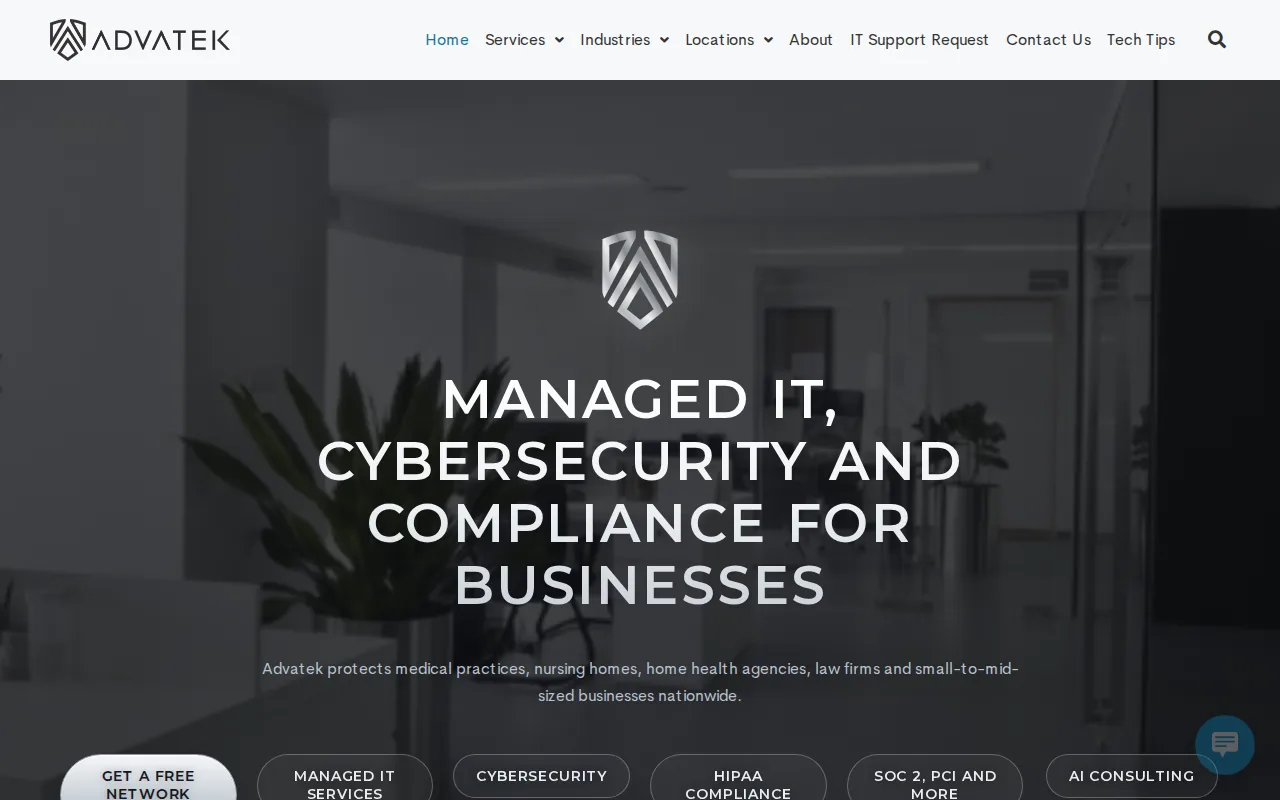
The team runs the HIPAA Security Risk Analysis you’re required to perform and hands you a written remediation plan. They also set up firewalls, servers, and AI‑driven threat detection at discounted vendor rates. For a wider view of governance partners, see Advatek’s guide to AI governance consulting.
Because the service is delivered as a managed‑services model, you get continuous monitoring instead of a one‑off audit. That means the network is watched around the clock and issues can be caught and patched early.
Advatek’s AI consulting sits on top of everyday IT tasks, so security, compliance training and AI tools are handled by the same team. It is built for small and mid-sized organizations rather than large enterprise governance programs.
2. EPC Group: Microsoft‑focused governance for regulated environments
EPC Group is a Houston‑based Microsoft consulting firm that builds AI governance programs aligned to NIST AI RMF, ISO/IEC 42001, and Purview. Their primary focus is regulated industries such as healthcare, finance, public‑sector, and energy.
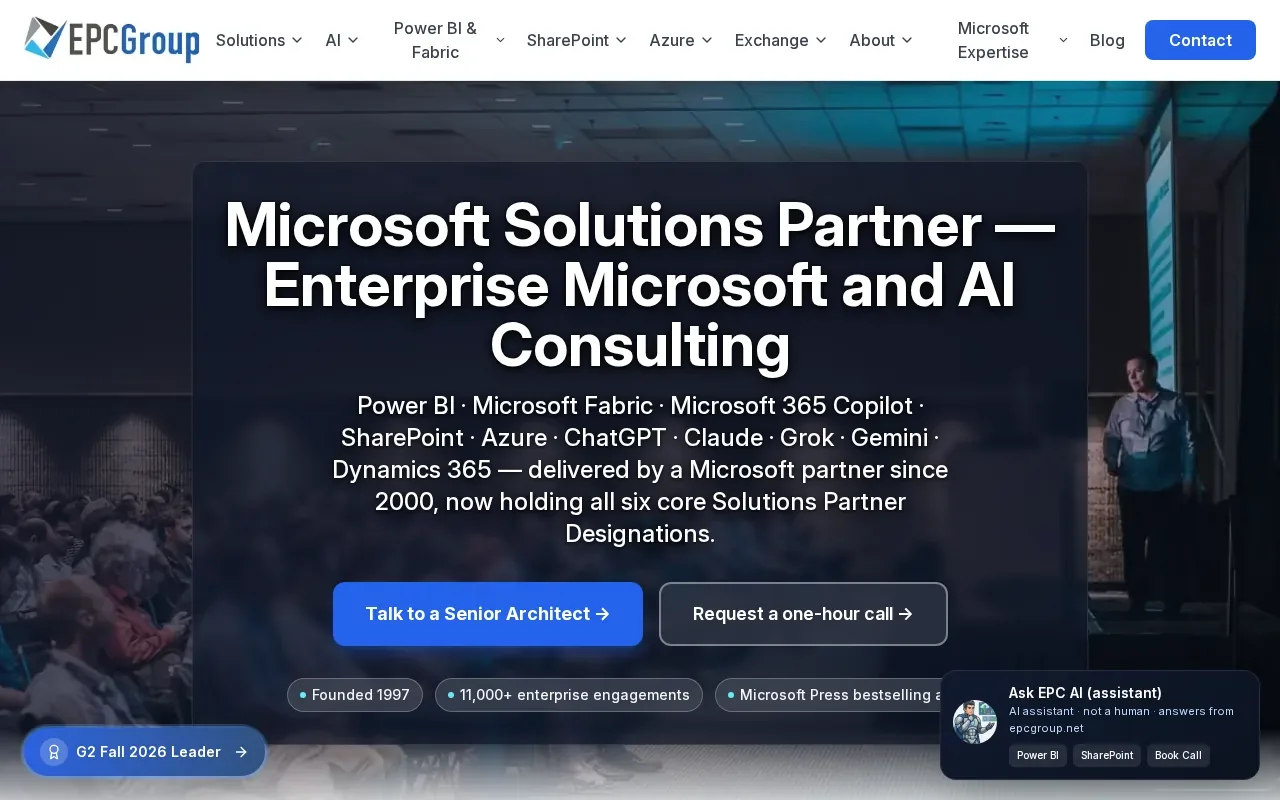
The firm delivers Copilot readiness checks, AI‑Ready Data Model assessments, and tenant‑wide governance reviews. Their work focuses on mapping controls to the evidence auditors ask for.
Clients appreciate the concrete deliverables, a risk register, an exception log, and a documented AI policy library. NIST AI Risk Management Framework underpins their methodology, ensuring the approach matches federal guidance.
A limitation to note: EPC Group’s focus is the Microsoft stack, so organizations built mainly on other platforms should confirm fit first.
3. Deloitte: Trustworthy AI and regulatory support for complex organizations
Deloitte offers AI governance and regulatory advisory built around its Trustworthy AI framework. Deloitte serves financial services, healthcare, and government organizations, with AI compliance work focused on risk.

For healthcare providers and law firms, a qualified IT service company can help assess AI use in everyday workflows, including how sensitive information is handled and how decisions are reviewed. Governance needs to fit the organization’s systems and responsibilities.
Professional implementation and ongoing management can help teams address risks and limitations; deploying AI without IT guidance may leave gaps in oversight or data handling.
Organizations should evaluate controls before deployment.
4. Accenture: Connecting AI governance decisions to enterprise implementation
Accenture translates AI risk decisions into actionable implementation steps across the enterprise. It works with large enterprises to embed governance into development pipelines, model inventories, and risk‑management files.
The firm’s scope covers AI governance advisory, lifecycle implementation, model‑use inventories, and documentation support for audits. It helps turn governance policies into controls that development teams can apply.
Accenture’s biggest strength is the ability to align AI risk decisions with the organization’s operating model, so the governance layer doesn’t become a separate silo.
However, the service is heavily consultancy‑driven, which can mean higher billable rates than a pure‑play managed‑services provider.
For deeper insight, read Best AI Compliance Software: 10 Tools to Compare, which compares tools that support AI compliance work.
Key Takeaway: Accenture excels at moving from policy to production, making it a fit for large firms that need a tight hand‑off.
5. DNV: Evidence‑focused AI lifecycle assurance
DNV offers an assurance‑style evidence workflow that ties AI lifecycle activities into a single compliance documentation chain. The approach starts with assessment planning and ends with post‑market oversight.
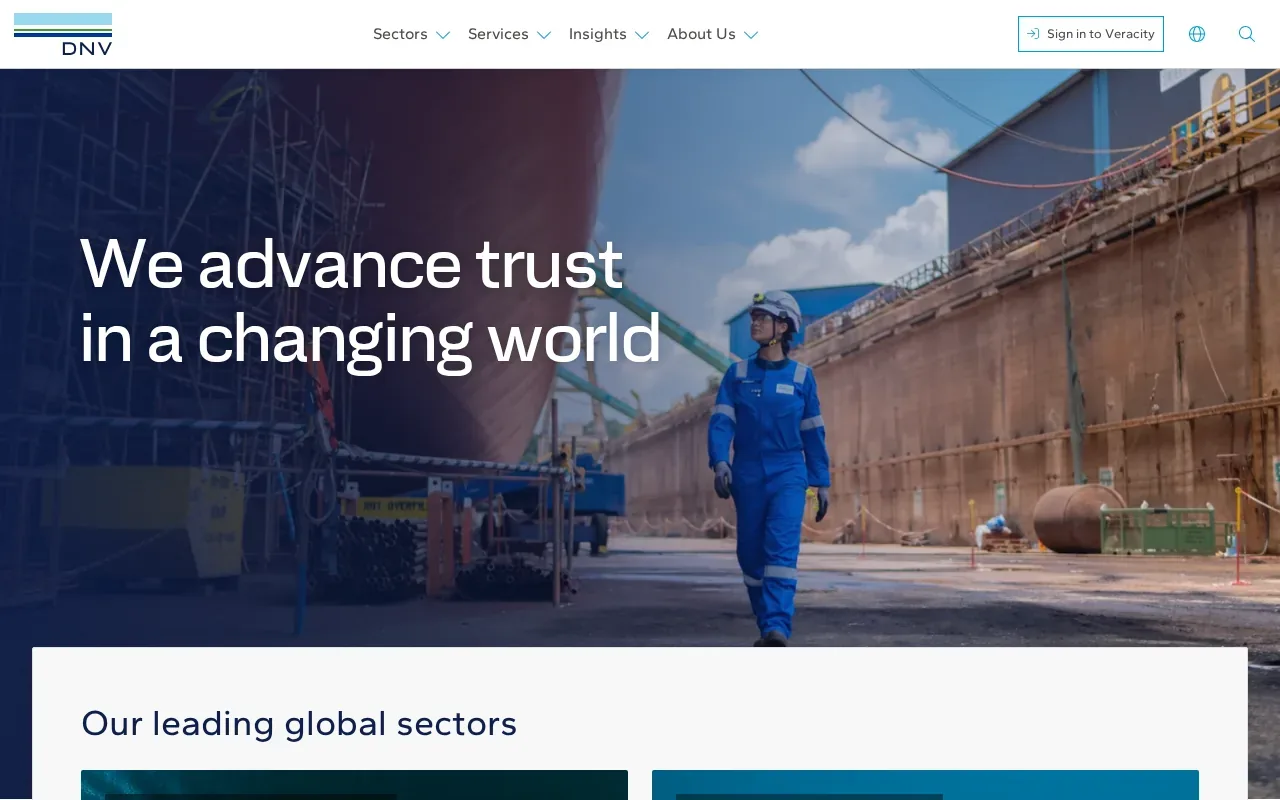
Their services include AI risk assessment support, conformity planning, structured control packages, and continuous monitoring. DNV’s work aligns with ISO/IEC 42001 and the EU AI Act, and DNV offers certification against ISO/IEC 42001.
The firm’s expertise spans energy, maritime, and heavy industry, but it also serves enterprises that need rigorous, auditor‑ready evidence.
A potential drawback is that DNV’s focus is on assurance rather than day‑to‑day operational monitoring, so you may still need a managed‑services partner for continuous security.
For usable steps on starting an AI risk assessment, see How to Conduct an AI Risk Assessment.
Pro Tip: Pair DNV’s assurance package with a 24/7 security provider to cover both documentation and real‑time threat detection.
Compare the five AI compliance consulting options
| Provider | Service Model | Industry Focus | Regulatory Frameworks | Delivery Approach |
|---|---|---|---|---|
| Advatek | Managed IT & 24/7 monitoring | Healthcare, finance, law | HIPAA, PHI, industry‑specific privacy | Ongoing operational support |
| EPC Group | Project‑based governance | Regulated (health, finance, energy) | NIST AI RMF, ISO/IEC 42001, EU AI Act | Project engagements |
| Deloitte | Advisory & implementation | Financial services, healthcare, government | NIST, emerging EU rules | Hybrid (consulting + rollout) |
| Accenture | Governance‑to‑implementation | Enterprises (all sectors) | ISO/IEC 42001, EU AI Act | Strategic advisory + delivery |
| DNV | Assurance‑style evidence | Enterprises, heavy industry | ISO/IEC 42001, EU AI Act | Assessment planning → post‑market |
When you weigh these options, consider whether you need continuous monitoring (Advatek), a Microsoft‑centric governance engine (EPC Group), large‑scale advisory (Deloitte), a hand‑off from policy to code (Accenture), or a formal assurance audit trail (DNV).
For a quick reference on AI governance frameworks, see AI Governance Framework: Core Elements & Use Cases.
Frequently Asked Questions
What is AI compliance consulting?
AI compliance consulting helps organizations align AI projects with regulations, industry standards, and internal policies. It typically covers risk assessments, governance frameworks, documentation, and ongoing monitoring to keep AI systems lawful and trustworthy.
Do I need a separate security provider for AI compliance?
Often, yes. Governance consultants design policies, but compliance programs also depend on day-to-day security monitoring. A managed‑services partner like Advatek can provide 24/7 threat detection while the consulting firm designs the governance model.
Which framework is best for a healthcare practice?
Covered healthcare entities must meet the HIPAA Security Rule when AI tools handle PHI. The NIST AI Risk Management Framework is voluntary, but it gives a useful structure for documenting AI risks alongside HIPAA safeguards.
Can a small business afford these services?
Small and mid‑sized firms often start with a managed‑services model that bundles monitoring and basic AI risk checks, which keeps costs predictable.
How long does an AI governance implementation take?
It depends on scope. A focused risk assessment for one AI tool is a much smaller project than an enterprise-wide governance rollout, so ask each provider for a timeline based on your systems.
Conclusion
If you need a partner that blends ongoing security with AI governance, Advatek is a strong fit for small and mid-sized regulated U.S. businesses. Reach out to start a risk‑assessment and see how managed services can keep your AI projects compliant today.
Download Franchise Information Report
Want to learn more about opening your own franchise? Fill out this form to get started: